Leather Manufacturing
Why Small Production Errors Become Big Problems in Bulk Orders
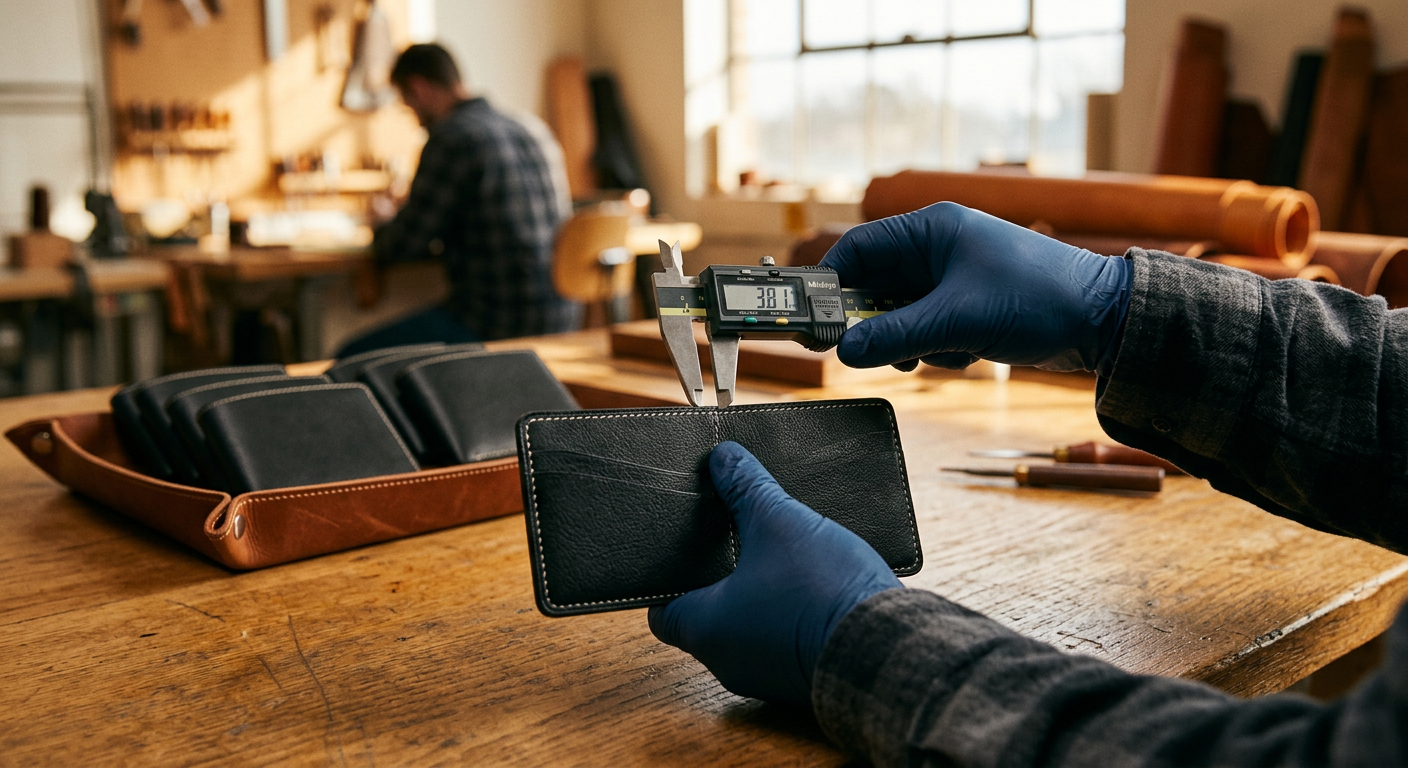
A minor flaw on one sample is an observation. That same flaw across 1,000 units is a commercial disaster. We explore how small errors scale into major problems during bulk leather production and how to prevent them.
The buyer's problem
Every seasoned buyer has a story. The story often begins with a beautiful pre-production sample. The leather is perfect, the stitching is immaculate, the hardware gleams. An order for 1,000 units is placed with confidence. The problem comes three months later, when the container arrives. The stitching on the final product is consistently 2mm further from the edge than on the approved sample. It’s a tiny deviation, but across 1,000 premium handbags, it changes the entire aesthetic. What was a minor point of feedback is now a major, costly crisis threatening a product launch and a brand's reputation.
This is the core challenge of scaling from a single, perfect unit to high-volume manufacturing. Small, seemingly insignificant errors do not simply get copied; they multiply and compound, creating systemic flaws that can render an entire shipment unsellable. Choosing a manufacturing partner is not just about their ability to make one great bag; it's about their proven systems to make 1,000 identical great bags. Understanding the mechanics of bulk leather production is the first step to safeguarding your investment and your brand.
What "bulk leather production" actually means in a factory
When we move from making a single sample to fulfilling a bulk order, the entire methodology on the factory floor changes. A sample is a work of craft, often made by one or two of our most senior artisans who interpret a tech pack with their decades of experience. They might hand-cut the patterns and make micro-adjustments on the fly. This is essential for developing a product, but it is not a scalable process.
True bulk leather production is a work of engineering and systemisation. The goal shifts from individual artistry to absolute consistency. Here’s what changes:
- Patterns to Dies: Hand-cutting with a knife is replaced by hydraulic-press cutting using steel-rule dies. A single die set can cost several hundred pounds to create, but it guarantees that every single panel for an order of 500 leather wallets is cut to the exact same dimension, every time. An error in the die means an error on every single cut panel.
- Individual Work to Assembly Line: Instead of one person building a whole bag, we break the process into specialised stations. One station for skiving (thinning leather edges), another for glueing, another for stitching main bodies, another for attaching straps. Each station has jigs, guides, and pre-set machines to ensure its specific task is performed identically on every unit. This increases speed and, crucially, consistency.
- Machine Calibration: A single sewing machine might be used for samples. For a bulk order, we may have 10 machines running the same stitch pattern. All 10 must be calibrated to have the same stitch length (SPI - Stitches Per Inch), thread tension, and needle type. A miscalibrated machine produces a subtle but consistent defect on every piece that passes through it.
- Material Batching: We don't pull leather from a general pile. For a bulk order, we secure and process a single, large batch of tanned hides. This is critical for ensuring colour and grain consistency across the entire order. We inspect this batch for defects before the first cut is ever made.
In essence, bulk leather production is about removing variables. The process is designed to be a repeatable science, not a variable art. The 'error' that becomes a big problem is often a flaw in the system (a bad die, a mis-set machine, an ambiguous instruction) that is then executed perfectly, and disastrously, hundreds of times.
Materials, specs and standards
A detailed technical specification, or 'tech pack', is the foundational document for any production run. It is the constitution that governs every decision made on the factory floor. Ambiguity in a tech pack is a direct invitation for error. A spec that says "strong thread" is useless; a spec that says "Gutermann Mara 30, Tex 100 Polyester, Colour #414" is actionable. We work from your tech pack but also apply our own internal standards, honed over 25 years in business, to fill in the gaps and prevent problems.
A robust spec sheet doesn't just define materials; it defines tolerances. 'Tolerance' is the acceptable range of variation for a given measurement. Zero variation is impossible in a physical product, but defining the acceptable limits is what separates a professional operation from an amateur one. A brand's quality perception is built on this consistency.
Here are some examples of the standards and tolerances we manage during production:
| Specification Area | Standard / Metric | Typical Tolerance | Why It Matters |
|---|---|---|---|
| Stitching Alignment | Distance from edge | +/- 0.5mm | Prevents a 'wavy' or unprofessional stitch line that cheapens the product. |
| Stitches Per Inch (SPI) | Number of stitches | +/- 1 SPI | Affects both the aesthetic and the seam strength. Inconsistent SPI looks messy. |
| Dimensional Accuracy | Overall HxWxD | +/- 2.0mm | Ensures the final product matches its advertised size and can fit intended items. |
| Hardware Placement | Centring, distance from top | +/- 1.0mm | A slightly off-centre lock or logo is a highly visible and immediate sign of poor quality. |
| Edge Paint Application | Thickness & coverage | No drips or gaps | Uneven or thin edge paint is a key durability failure point and looks unfinished. |
| Panel Alignment | Mismatch between seams | < 1.0mm | Critical on products with patterns or multiple panels, like our leather backpacks. |
| Thread End Backtack | Number of stitches | 3-4 stitches | Secures the seam. Too few and it unravels; too many and it creates a bulky, ugly lump. |
Approving a sample is not the end of the process; it is the act of ratifying the tech pack and its associated tolerances. Once that sample is approved, it becomes the 'Gold Seal' standard against which every single production piece is measured. Any deviation found during our multi-stage QC process is flagged by referencing this approved sample.
Our process, step by step
To prevent small errors from escalating, we have built a rigorous, transparent process that involves our partners at key stages. This ensures alignment and eliminates surprises. When you work with us on a custom manufacturing project, here is the path we take together:
Enquiry & Quoting: You send us your tech pack or reference images. We review the design for manufacturability, suggest materials, and provide a detailed quote within 24-48 hours. This quote will include unit price, sample cost, and estimated lead times.
Materials Sourcing & Confirmation: Upon confirmation, we begin sourcing the exact leather, lining, hardware, and thread specified. We send you swatches and samples of these raw materials for your physical approval.
Pre-Production (PP) Sampling: We create the first full sample. This is our interpretation of your tech pack. We ship this to you for review. This stage typically takes 10-14 days. This is the most critical feedback loop.
Sample Revisions & Approval: You provide feedback. We incorporate any changes and create a revised sample if necessary. We repeat this until you are 100% satisfied. Your final approval of the 'Gold Seal' sample is our green light for bulk leather production.
Tooling & Pattern Digitisation: We create the steel-rule cutting dies, jigs, and any other specialised tooling required for your specific design. Your approved pattern is digitised and locked.
Cutting & Preparation: The approved leather batch is inspected and then cut using the new dies. All panels for the entire order are cut at once for consistency. Components are skived, edges are prepared, and reinforcements are applied.
Assembly Line Production: The cut components are organised into kits, one for each final product. These kits then move through our specialised assembly stations, from stitching to hardware attachment.
In-Line Quality Control: We don't wait until the end to check for quality. Our line supervisors perform spot checks at critical stages (e.g., after stitching, before lining is closed). This allows us to catch any deviation from the standard early, before it's replicated across hundreds of units.
Final QC & Finishing: Every completed unit goes to our dedicated final QC department. Here, it is inspected against a detailed checklist derived from your tech pack and the approved 'Gold Seal' sample. Each item is cleaned, stuffed, and carefully packed into individual polybags with desiccants.
Packing & Shipment: The units are boxed into export-grade cartons. We send you photos of the final packed product and arrange for shipment. For our standard FOB Chattogram (Chittagong) Port terms, this means we handle all documentation up to the point the goods are loaded onto the vessel.
MOQs, lead times and pricing signals
When you're evaluating a factory, the numbers they give you for Minimum Order Quantity (MOQ), lead time, and pricing are not arbitrary. They are signals that tell you about the kind of factory they are and the clients they are set up to serve.
Our MOQ is 50 pieces per style/colour. This is a deliberate choice. It signals that we are structured to support both emerging brands testing a new design and established brands wanting to offer a wider variety of styles or colours without massive inventory risk. A factory demanding a 1,000-piece MOQ is built for mass-market volume, often at the expense of complexity and quality focus. Our lower MOQ provides flexibility and is a testament to our efficient changeover processes.
Our lead times are also indicative:
- Sampling: 10-14 days. This speed reflects an experienced sampling department and efficient local material sourcing. A factory that takes 4-6 weeks to make a single sample may have disorganised processes or is not prioritising your business.
- Production: 25-45 days after sample approval. The range depends on the order quantity and complexity of the design. This timeframe allows for proper material sourcing, tooling, methodical production, and rigorous multi-stage QC. Be wary of any factory promising significantly faster times for custom goods, as it often means they are cutting corners on quality control or material inspection.
Our pricing is quoted as FOB Chattogram (Chittagong) Port, Bangladesh. This is a standard Incoterm meaning we are responsible for the goods, including all costs and export formalities, until they are loaded onto the shipping vessel at our port. Your cost includes the product, packing, and transport to the port. You are then responsible for the sea freight, insurance, and import duties in your country. We handle all the necessary documentation (Commercial Invoice, Packing List, Bill of Lading, Certificate of Origin, GSP Form A if applicable) to ensure a smooth customs clearance process for you or your freight forwarder.
Common mistakes buyers make
Over our 25 years in business, we've seen buyers make the same handful of preventable mistakes that lead to production problems. Here are the most common, and how to fix them.
Mistake: Approving a sample with a "small issue" you assume will be fixed in production.
- The Fix: Never, ever do this. The approved sample is the blueprint. If there is a flaw, reject the sample and wait for a corrected one. Verbally telling a sales rep "please make sure the stitch is straighter on the production run" is not a valid instruction. The only valid instruction is an approved, perfect sample.
Mistake: Providing an incomplete or ambiguous tech pack.
- The Fix: Your tech pack is a legal document. Instead of "dark brown leather," specify a Pantone colour reference and type of leather (e.g., "Full-grain cowhide, drum-dyed, Pantone 19-1111 TCX"). Specify every detail, from thread thickness to zipper brand. The more detail you provide, the fewer decisions the factory has to make (or get wrong). Our FAQ page has more on what to include.
Mistake: Making changes after production has started.
- The Fix: Resist the urge. A change that seems simple to you ("let's move that pocket up by 1cm") can have a massive knock-on effect in bulk production. It might require new cutting dies, new jigs, and retraining the assembly line, leading to delays, extra costs, and a high risk of quality errors. Lock your design at the final sample approval stage.
Mistake: Focusing only on the lowest unit price.
- The Fix: Compare apples to apples. A factory quoting a price that seems too good to be true is likely using inferior materials, skipping QC steps, or not paying their workers a fair wage. The cost of a 10% defect rate on a cheap order is often far higher than paying a fair price for a 0% defect rate from a quality-focused partner like us.
Mistake: Not budgeting for samples, shipping, and duties.
- The Fix: Your Total Landed Cost is more than the factory unit price. Factor in sample development costs, shipping from the factory to you (air freight for samples, sea freight for bulk), import duties (which depend on the product's HTS code - e.g., bags are often under Chapter 4202), and any customs broker fees. We quote FOB, so the sea freight and import costs are yours to manage.
Mistake: Poor communication.
- The Fix: Establish a clear line of communication and be responsive. When we send you leather swatches for approval, a delay of one week on your side can delay the entire production timeline by a week. We pride ourselves on proactive communication; meeting us halfway ensures a smooth process.
How to evaluate a supplier for this
When you're interviewing a potential new manufacturing partner, you need to ask questions that reveal their systems, not just their sales pitch. Here is a checklist to help you vet a factory's ability to handle bulk production consistently.
- Ask for their QC checklist. Don't just ask if they do QC. Ask to see the document they use for final inspection. Is it a generic list, or is it a detailed, multi-point checklist specific to the product type? Does it include measurements, stitch counts, and hardware checks?
- Discuss their process for handling a failed in-line inspection. What happens when a supervisor finds a flaw on the assembly line? Do they have a documented process for pulling the defective units, diagnosing the root cause (e.g., machine fault, operator error), and correcting it before proceeding?
- Request photos of their tooling. For a product similar to yours, ask to see a photo of the steel-rule cutting dies and any assembly jigs they use. This proves they invest in the proper equipment for consistent production, which you can see in our own factory gallery.
- Query their material batching process. Ask how they ensure colour consistency across a 1,000-unit order. The correct answer involves sourcing leather from a single, large-tannage batch and inspecting the entire batch before cutting begins.
- Give them a hypothetical problem. Say, "Imagine we approve a sample, but during production, you find a flaw in the approved design that will cause a durability issue. What do you do?" A good partner will say they stop production, inform you immediately, and propose a solution, rather than blindly producing a flawed product.
- Check their understanding of your end market. Do they understand the quality expectations of a Western consumer brand? Have they produced for similar brands in your country before? This experience is invaluable in preventing misunderstandings about what constitutes an acceptable standard.
- Ask about traceability. For a given production run, can they tell you which batch of leather was used and which team worked on it? This level of internal tracking is a hallmark of a well-managed factory.
Ready to move from research to samples? Send us your tech-pack or reference image and we'll come back within 24 hours with materials, MOQ and an FOB quote. Request a quote →
Case snapshot
A mid-sized brand from the United States approached us to produce a new line of minimalist leather bags, with an initial order of 750 units (3 styles x 250 units each). Their designs were clean and elegant, but their tech pack specified a single line of stitching for attaching the shoulder straps' D-rings, which our technical team immediately flagged as a potential failure point under load. Instead of just proceeding, we paused the sampling process. We produced two versions of the strap attachment point for them to review: their original spec, and our proposed alternative which included a concealed nylon webbing reinforcement and a box-X stitch pattern. We sent a video demonstrating a stress test on both versions. The difference in strength was undeniable. The client approved our stronger, more durable solution. This proactive intervention added zero to the unit cost and only two days to the sampling timeline. The result was a successful production run, shipped on time via FOB Chattogram, with zero reports of strap failures from their customers in the first year of sales. This is the kind of partnership that prevents problems, rather than just reacting to them.
Frequently asked questions
What are your payment terms?
For new clients, our standard terms are 50% advance payment to confirm the order and begin material sourcing, and the remaining 50% balance payment upon completion of production, before shipment. We provide a full packing list and photographic evidence of the completed, packed order before the final balance is due.
How do you ensure the quality of the leather you source?
We work with a small group of trusted tanneries in Bangladesh with whom we have long-standing relationships. For every order, we specify the hide type, thickness, grade, and finish. The entire leather batch is delivered to our factory and inspected by our inbound QC team for defects, colour consistency, and texture before any of it is cut. We reject entire batches that do not meet the standard.
Can you accommodate our custom-branded hardware?
Yes. We can work with hardware you supply, or we can manage the sourcing and production of custom hardware (e.g., zipper pulls, buckles with your logo) through our network of suppliers. This requires clear technical drawings and has its own lead times and MOQs, which we would detail in our quote. We strongly recommend finalising hardware during the sampling stage.
What happens if I find defective units in the shipment I receive?
Our multi-stage QC process, with a final 100% inspection of every unit, is designed to ensure a defect rate of virtually zero. However, in the unlikely event you discover a unit with a manufacturing fault that slipped past our checks (and which deviates from the approved Gold Seal sample), we stand by our work. Contact us immediately with photos. We will assess the issue and offer a solution, which could range from a credit on your next order to a replacement, depending on the scale and nature of the problem.
What shipping documents do you provide for FOB shipments?
We handle all the necessary export documentation. As standard, we provide a Commercial Invoice, a detailed Packing List, the Bill of Lading (or Sea Waybill), and a Certificate of Origin. For clients in eligible countries (like the EU, UK, Canada, Australia), we also process the GSP Form A (Generalised System of Preferences), which can significantly reduce or eliminate your import duties.
Next step
Understanding the mechanics of bulk production is the key to protecting your brand and your investment. It's about choosing a partner who has built their reputation on consistency, not just a single great sample. If our systematic approach to quality and transparency aligns with your brand's values, we encourage you to take the next step.
Let's review your design and begin this process together. Send us your project details via our contact page and we'll demonstrate how we turn your vision into a quality, scalable product. If you're looking for inspiration, you can browse our full range of leather accessories to see the level of quality we consistently deliver.
Ready to manufacture
Request a quote from TAT Manufacture
Full-grain leather, low MOQ from 50 pcs, OEM & private label. Get a detailed itemised quote within 24 hours.
25 years of leather manufacturing craftsmanship.
Services →OEM, private label, and custom leather production.