Buying Guide
Why Sample Approval Is the Most Critical Step Before Bulk Production
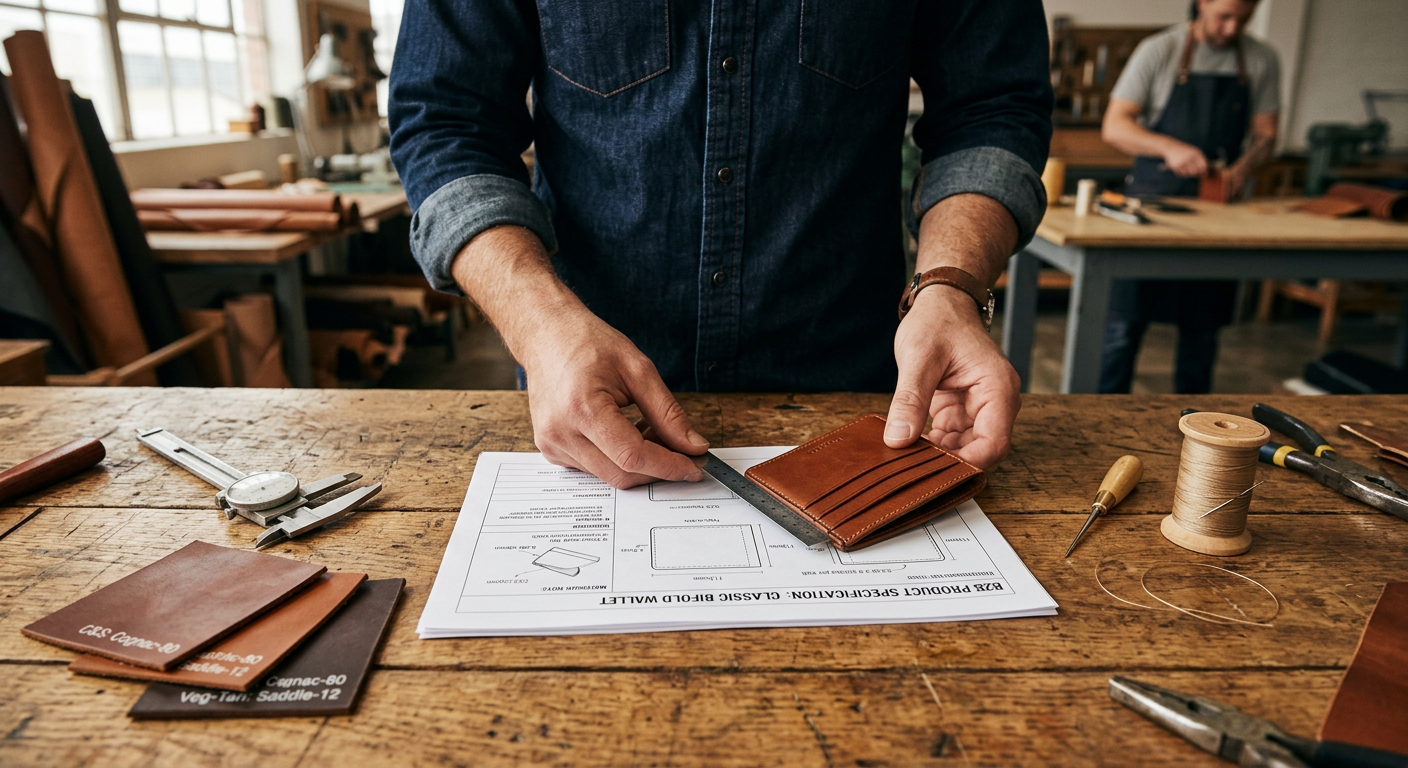
The difference between a successful product launch and a costly production disaster often comes down to one crucial stage. Learn why leather sample approval is non-negotiable.
The buyer's problem
For any brand, importer, or sourcing manager in the fashion industry, the moment of unboxing a bulk shipment is one of mixed anticipation and anxiety. When you have invested significant capital into an order of 500 custom leather bags, the discovery of a consistent flaw—a misaligned pocket, an incorrect hardware finish, or a leather colour that is two shades too dark—is more than a disappointment. It is a commercial disaster that can lead to missed seasonal sales windows, costly rework, or even a total write-off of inventory. This is the risk of misunderstanding or rushing the pre-production process.
Many of these catastrophic errors are not the result of a factory cutting corners during mass production. Instead, they originate from a breakdown in communication and a failure to properly finalise and agree upon a master standard before the first hide is cut for the bulk order. This is precisely why the formal leather sample approval stage exists. It is not a bureaucratic formality; it is the single most important quality assurance checkpoint in the entire manufacturing journey, designed to protect both the buyer and the manufacturer from ambiguity and financial loss.
What "leather sample approval" actually means in a factory
On the surface, it seems simple: we make a sample, you approve it. But within the factory walls, the leather sample approval process is a formal transition point that triggers significant operational changes. The approved sample, often called the Pre-Production (PP) sample, ceases to be a prototype and becomes the 'golden sample' or 'master standard'. This physical item is tagged, signed, and sometimes sealed. It is then put on display for our production line supervisors, our quality control team, and even our pattern cutters.
From that moment on, this approved sample becomes the ultimate authority, superseding even the technical drawings in certain respects. While the tech-pack provides the measurements and construction details, the PP sample provides the tangible reality of the product. It answers subjective questions a drawing cannot: How does the handle feel? What is the true lustre of the antique brass buckle? How flexible is the edge paint? We train our QC staff to compare every batch against this master standard. If a production unit deviates from it beyond the agreed tolerance, it is flagged.
It is important to differentiate between sample types:
- Proto Sample: The first attempt based on your tech-pack. Its purpose is to get the basic design, construction, and pattern right.
- Salesman Sample: Often made in multiple colours for you to show to your own buyers. These are based on a confirmed proto sample.
- Pre-Production (PP) Sample: The final version, created using the exact bulk materials and production methods. This is the sample that undergoes the formal leather sample approval. Once you approve this, you are authorising us to replicate it hundreds or thousands of times.
- Top of Production (TOP) Sample: A unit pulled from the very first batch of the main production run. We send this to you for final confirmation that the bulk process is correctly replicating the approved PP sample.
Materials, specs and standards
Approving a sample means approving every component and construction detail within it. Vague feedback like "looks good" is insufficient. A professional approval requires a granular review against a set of specifications and agreed-upon tolerances. A production partner like us, with over 25 years of experience (you can learn more about TAT Manufacture), works with you to define these standards before the PP sample is even made. The tech-pack is the starting point, but the sample is the physical contract.
Here are some of the typical specifications we confirm during the sampling stage. These are the details our quality control team checks against the master sample on the factory floor.
| Specification | TAT Manufacture Standard | Tolerance / Checkpoint |
|---|---|---|
| Leather Grade & Thickness | As specified (e.g., Full-Grain Cowhide, 1.4-1.6mm) | +/- 0.2mm variation |
| Stitching Density (SPI) | 8-10 stitches per inch for leather wallets | +/- 1 stitch per inch |
| Colour Consistency | Matched to Pantone code or client-supplied swatch | Within agreed Delta E range under D65 light |
| Hardware Finish | As specified (e.g., Antique Brass, Polished Nickel) | No scratches, tarnishing, or plating defects |
| Edge Finish | Burnished or painted, as specified | Smooth, even application with no cracking |
| Dimensional Accuracy | As per tech-pack | +/- 2mm on small goods, +/- 5mm on large bags |
| Lining Material | As specified (e.g., 150D Polyester, Cotton Twill) | Correct weight, colour, and weave |
| Reinforcement Points | Bar-tacked or riveted at strap bases, corners | All specified points are reinforced as per sample |
Our process, step by step
To ensure clarity and eliminate surprises, we follow a structured process that places the PP sample at the heart of the production commitment. Our goal is to move from your initial idea to a shipped product with maximum efficiency and quality assurance.
Enquiry and Initial Quote: You send us your design brief, reference images, or a full tech-pack via our contact form. We review the details and provide an initial indicative quote for sampling and bulk production (FOB Chattogram) within 24-48 hours.
Technical Review: Our merchandisers and pattern masters analyse your tech-pack. We may ask questions or suggest refinements based on our manufacturing experience—for instance, a different seam construction for better durability on a specific type of leather jacket.
Proto Sample Development: We create the first physical sample. This stage focuses on getting the patterns, dimensions, and core construction correct. We source and use the closest available materials we have in-house.
Client Feedback & Revisions: We ship the proto sample to you. You review it and provide detailed, consolidated feedback. We discuss any required changes to the design, fit, or function. If significant changes are needed, a second proto may be required.
Pre-Production (PP) Sample Creation: Once the pattern is locked, we create the PP sample. This is the crucial step. We use the actual bulk materials—the specific hide consignment, the final approved hardware, the correct lining. This is what the final product will look, feel, and weigh like.
Final Leather Sample Approval: You receive the PP sample. This is the moment of truth. You must thoroughly inspect it, test it, and formally approve it in writing. Any final, minor tweaks are noted. Your signed approval authorises us to procure all bulk materials and begin production.
Bulk Material Procurement & QC: With the approved sample as our guide, we order all materials. Our incoming goods QC team inspects all leather hides, hardware, and fabrics to ensure they match the PP sample's standard.
Mass Production: Our production lines are set up with jigs, guides, and the master PP sample for constant reference. We begin cutting, stitching, and assembling your order. Production for 500-1000 units typically takes 25-45 days.
In-Line and Final Inspection: Our QC inspectors check the products at multiple stages of production ('in-line') and perform a final AQL (Accepted Quality Limit) inspection on the finished, packaged goods, comparing them directly against the PP sample.
Packing and Shipment: Once the goods pass final QC, they are packed as per your requirements. We handle all export documentation, including declaring the correct HTS Harmonized System codes (e.g., 4202.21 for leather handbags), and manage the logistics to get your order onto a vessel at the Port of Chattogram (FOB terms).
MOQs, lead times and pricing signals
Understanding how sampling fits into the overall commercial picture is vital. At TAT Manufacture, we aim for transparency. Our Minimum Order Quantity (MOQ) is 50 pieces per style and colour, which is accessible for emerging brands and for established companies testing a new design.
- Sample Lead Time: A proto or PP sample typically takes 10 to 14 working days to produce, once all materials and details are confirmed. This does not include international shipping time.
- Production Lead Time: Bulk production takes between 25 and 45 days. This clock starts after you have given final leather sample approval and we have received the deposit. Delays in approving your sample will directly delay your final delivery date.
- Pricing: Sample costs are generally 1.5x to 3x the per-unit bulk price. This covers the higher cost of manual pattern making, individual cutting, sourcing small quantities of materials, and the undivided attention of our senior technicians. For most substantial orders, we credit a portion or all of the sample fee back against your bulk order invoice. The price of a sample is a signal; a very low sample cost might indicate the factory is not using the final bulk materials, which defeats the purpose of a PP sample.
All our bulk production pricing is quoted as FOB (Free On Board) Port of Chattogram, Bangladesh. This means our price includes manufacturing the goods, packing them, and delivering them to the port, ready to be loaded onto the shipping vessel you arrange. We can assist with freight forwarding arrangements if needed.
Common mistakes buyers make
After 25 years in this business, we have seen buyers make the same handful of costly mistakes during the sampling phase. Avoiding them is key to a smooth production run.
Providing Vague, Subjective Feedback: Comments like "it doesn't feel premium enough" or "make it look better" are impossible for a factory to act on. The Fix: Be specific. Say "Increase stitch density from 7 to 9 SPI," "Use a fully burnished edge instead of a painted one," or "The zipper pulls feel too light; let's switch to the YKK #5 antique brass option."
Rushing the Approval: You are busy, but a quick glance and a fast "Looks good, go ahead" email on a PP sample can be a million-dollar mistake. The Fix: Treat the sample like a final product. Use it for a few days. Put items inside the leather backpack. Fill the card slots of the leather wallet. Test the zippers and clasps 50 times. Check every single seam.
Approving a Sample That Deviates from the Tech-Pack: Sometimes during sampling, a practical improvement is made (e.g., moving a pocket by 1cm). You approve the sample, but the tech-pack is never updated. This creates confusion for QC and for future re-orders. The Fix: Any change made and approved on a sample must be immediately updated in the tech-pack. We call this 'red-lining' the spec. The final approved PP sample and the final tech-pack must match perfectly.
Not Requesting a Full Material Breakdown: You approve the look of the sample but are not sure of the exact tannery, hardware supplier, or lining fabric weight. The factory might then substitute a 'similar' material for bulk that doesn't perform the same way. The Fix: Insist on a Bill of Materials (BOM) that lists the exact specifications and source for every component of the PP sample.
Forgetting About Packaging and Labels: You approve a perfect product, but the bulk order arrives with cheap polybags, incorrect barcodes, or missing 'Made in' labels, creating a receiving and compliance nightmare. The Fix: Insist that the PP sample is sent with all final packaging: polybag, hangtags, carton labels, and any inserts. Approve these just as you would the product itself.
Ignoring a Manufacturer's Warning: If we, as your manufacturing partner, tell you that a certain design feature will likely fail or cause production issues (e.g., "this thin strap will not hold the weight of this bag"), it is wise to listen. The Fix: View your manufacturer as an expert partner. Our goal is to produce a successful product for you. If we raise a red flag, it's based on experience. We can work together on a better solution.
How to evaluate a supplier for this
When you are comparing potential manufacturing partners, do not just look at their finished products in a gallery. Pay close attention to how they manage the sampling and approval process. This is a powerful indicator of their professionalism, communication, and commitment to quality.
Use this checklist to evaluate a potential supplier:
- Communication Quality: Do they ask intelligent questions about your tech-pack, or just quote a price? A good partner will be proactive in identifying potential issues before a sample is even made.
- Sample Documentation: Does the sample arrive with a tag that references your style number, the date, and the sample type (e.g., 'PP Sample')? Do they provide a spec sheet with it for you to fill in your comments? This shows they have a system.
- Transparency on Materials: Are they willing to tell you the specs of the materials used in the sample? A factory that is secretive about its supply chain may be planning to substitute materials later.
- Process Clarity: Can they clearly explain their step-by-step process for sample revisions and final leather sample approval? Ask them what happens if you are not happy with the first PP sample.
- Problem-Solving Attitude: When you give feedback, do they simply make the change, or do they discuss the implications? For example, moving a seam might require a whole new set of expensive cutting dies. A good partner will explain the cost and time impact of your requested changes.
- Master Sample Handling: Ask them what they physically do with the approved PP sample. The correct answer is that it is signed, tagged, and becomes the master standard for the production line and QC team.
Ready to move from research to samples? Send us your tech-pack or reference image and we'll come back within 24 hours with materials, MOQ and an FOB quote. Request a quote →
Case snapshot
A mid-sized German brand approached us to produce a new line of convertible leather accessories — a clutch that could also be worn as a belt bag. They provided a beautiful design and initial tech-pack for a 400-unit order. Our first proto sample, built exactly to their spec, immediately revealed a potential weak point. The mechanism for attaching the straps put too much focused stress on a single point of the soft, 1.2mm lambskin they had specified. In our assessment, this would likely lead to tearing with regular use.
Instead of just sending the flawed sample, we sent it along with a second version we created proactively. This second option included a discreet internal nylon reinforcement and a different stitching pattern (a small box-X stitch) to better distribute the load. We included a note explaining our reasoning. The client tested both samples and agreed our revised construction was far more durable without compromising the aesthetic. They approved the revised version as their official PP sample. The final production run of 400 pieces was shipped FOB Chattogram to Hamburg and launched successfully, with zero reported issues of strap failure, saving the brand from what could have been a disastrous product launch and recall.
Frequently asked questions
How much do samples cost?
Sample costs vary depending on the complexity of the design, material costs, and whether new patterns need to be created from scratch. As a general rule, expect a sample to cost between 1.5 and 3 times the final per-piece price of a bulk order. This fee covers the disproportionate amount of manual labour and technical skill required for a single unit. For significant bulk orders (typically over 1000 pieces), we often credit the sample development fee back to you.
Can we provide our own leather or hardware?
Yes, this is possible under what is known as a CMT (Cut, Make, Trim) arrangement in some cases. However, we must first receive a sample of your supplied material to test its workability with our machines and techniques. Supplying your own materials can also introduce logistical complexities and may affect the production timeline. The leather sample approval must still be performed using your exact, bulk-shipped material to be valid.
What is your average sample lead time?
Once we have a finalised tech-pack and all details are confirmed, our standard lead time for creating a proto or PP sample is 10 to 14 working days. For highly complex items like structured leather bags or detailed jackets, it may be slightly longer. This timeframe does not include the international courier time to get the sample to you.
What if we're not happy with the pre-production sample?
Our process is designed to prevent this, as most design issues are solved at the earlier proto-sample stage. However, if the PP sample is not right, we need you to provide clear, specific, and consolidated feedback. Minor adjustments can typically be incorporated into the production run. If a fundamental change is required, a second PP sample will be necessary, which may incur additional time and cost. Our commitment is to work with you until the sample is perfect for production.
Do you ship samples internationally?
Yes, absolutely. We ship samples to clients worldwide every day using reliable couriers like DHL, FedEx, or UPS. We will provide you with a shipping quote for your approval, and the client typically covers this cost. We provide all tracking information so you can monitor the delivery.
How does sample approval connect to QC in bulk production?
This is the most critical link. The signed, approved PP sample is not filed away. It is physically present on the production floor. Our QC team uses it as the 'golden standard' for visual and tactile checks. We use calipers and gauges to check its dimensions, and our line supervisors use it to verify assembly steps. Every single finished product in your order is judged against this physical benchmark, ensuring that what you approved is what we produce.
Next step
The sample approval stage is where drawings become reality and where quality is locked in. It is your most powerful tool for ensuring a predictable, successful production outcome. By treating it with the seriousness it deserves, you protect your investment, your brand's reputation, and your customers' satisfaction.
If you are ready to start the process with a manufacturing partner who understands the critical importance of getting the details right, we invite you to send us your project details. We are ready to build your next great product, starting with the perfect sample. Contact us to request a quote or explore our full custom product programme.
Ready to manufacture
Request a quote from TAT Manufacture
Full-grain leather, low MOQ from 50 pcs, OEM & private label. Get a detailed itemised quote within 24 hours.
25 years of leather manufacturing craftsmanship.
Services →OEM, private label, and custom leather production.