Buying Guide
Why Do Some Leather Bags Last 10 Years While Others Peel Within a Year?
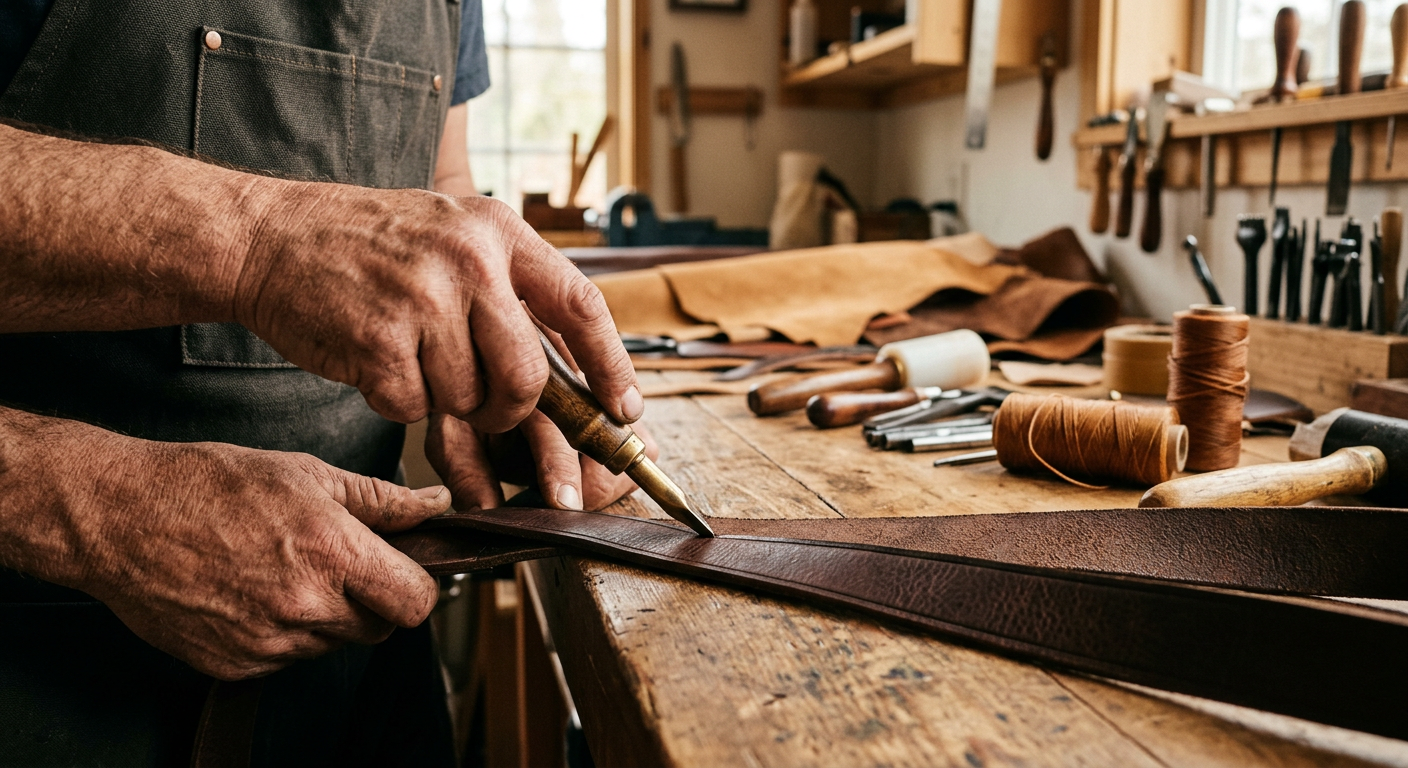
Discover the manufacturing, material, and finishing factors that determine how long a leather bag lasts before it shows signs of wear and affects your brand's reputation.
Why Do Some Leather Bags Last 10 Years While Others Peel Within a Year?
As a buyer for a fashion brand, your reputation rests on the quality of your products. A customer who invests in a leather bag expects it to last. When that bag starts to peel, crack, or fall apart within a year, the complaint doesn't just go to the retailer—it reflects directly on your brand. The financial cost of returns and replacements is small compared to the long-term damage to customer trust and your brand's perceived value. Choosing the right manufacturing partner is a commercial decision, not just a procurement one. Understanding the nuances of leather bag durability is fundamental to that choice.
This discrepancy between a bag that lasts a decade and one that fails in a season isn't accidental. It's the result of dozens of small, deliberate decisions made on the factory floor. These decisions, from hide selection and hardware specification to the type of thread used, are the difference between a product that builds your brand and one that undermines it. For serious buyers comparing suppliers, looking beyond the sample photo and FOB price to scrutinise these details is what separates a successful collection from a costly liability. We believe in transparency, and this guide is intended to show you what we look for, so you can demand the same high standards.
The Buyer's Problem
For a brand founder or sourcing manager, the core problem is risk management. A supplier that offers a surprisingly low price may be cutting corners on materials or processes that are not immediately obvious on a pre-production sample. The consequences often appear six to twelve months after the end-customer has made their purchase. By then, the damage is done. Customer complaints, negative online reviews, and pressure on your customer service team create a cascade of problems that are far more expensive than the initial saving on a lower-quality batch.
The real challenge is that from a distance, a well-made bag and a poorly-made one can look remarkably similar. The gloss of a finish, the initial feel of the material, and a clean sample can mask underlying issues. Your challenge is to assess long-term leather bag durability from a supplier you may be thousands of miles away from. This requires knowing the right questions to ask, the right specifications to demand, and how to interpret the signals a factory sends through its pricing, communication, and processes.
What "Leather Bag Durability" Actually Means in a Factory
In a manufacturing context, leather bag durability is not a single attribute but a system of interdependent components and processes. When a buyer asks for a “durable bag,” we translate that into a series of technical specifications that affect every stage of production. A failure in any one of these areas can compromise the entire product. A strong full-grain leather panel is of little use if the stitching that holds it together fails, or if the zinc-alloy zip corrodes shut.
Here’s what we consider on the production floor:
- Material Failure: This is the most visible issue. Does the surface peel, bubble, or flake? This is common with bonded leather or poorly finished PU, which are often deceptively marketed as 'leather'. For us, durability begins with using full-grain or top-grain hides that develop a patina over time, rather than degrading.
- Structural Integrity: This relates to how the bag is constructed. Key aspects include stitch density (stitches per inch, or SPI), thread type (we use bonded nylon for its strength and resistance to mildew), and reinforcement at stress points. Straps anchors, corner seams, and handle bases must have internal reinforcement (e.g., with webbing or dense non-woven material) to prevent tearing under load.
- Hardware Longevity: Hardware—zips, buckles, clasps, and studs—is a frequent point of failure. Durability here means specifying corrosion-resistant materials like solid brass or stainless steel, rather than the cheaper zinc alloys that are simply plated. We test hardware from our suppliers for salt-spray resistance and cycle counts to ensure they meet our standards.
- Edge & Finish Resilience: How the edges of the leather are finished is a clear indicator of quality. A painted or burnished edge that is meticulously applied will resist fraying and moisture for years. A raw or poorly painted edge will quickly deteriorate, making the entire bag look cheap and worn. This step is labour-intensive, which is why it's often rushed by low-cost producers.
Materials, Specs and Standards
Every decision cascades. The choice of leather dictates the appropriate thread; the weight of the bag dictates the reinforcement needed for the straps. A detailed technical specification (tech pack) is the blueprint for a durable product. As a manufacturer with over 25 years of experience, a detailed tech pack from a client is a signal they are serious about quality. If a client does not have one, we guide them through creating one. Below is a table illustrating the difference between a high-durability spec and a low-cost spec.
| Feature | High-Durability Specification | Low-Cost / Common Failure Point |
|---|---|---|
| Primary Material | Full-Grain or Top-Grain Cowhide (1.2-1.6mm) | Bonded Leather, PU, or "Genuine Leather" Split |
| Stitching Thread | Bonded Nylon, Tex 70 or higher | Spun Polyester, lower Tex sizes |
| Stitches Per Inch | 8-10 SPI | 5-7 SPI (creates larger, weaker holes) |
| Stress Points | Nylon webbing reinforcement, box-stitched | No reinforcement, single stitch line |
| Hardware | Solid Brass, Stainless Steel, YKK Excella Zips | Plated Zinc Alloy, generic brand zips |
| Edge Finish | Multiple layers of hand-sanded edge paint/burnish | Single layer of paint, or raw cut edge |
| Lining | Cotton Drill/Canvas (280+ gsm) | Thin Polyester or non-woven fabric |
| HTS Code Example | 4202.21 (Handbags with outer surface of leather) | 4202.22 (Handbags with plastic/textile outer) |
Understanding these differences is crucial. For instance, requesting 'genuine leather' often results in factories using the lowest quality split hides, which are technically leather but lack the strength of the upper layers of the hide. Clear specifications from the outset prevent misinterpretation and ensure the final product meets your brand's standards for leather bag durability.
Our Process, Step by Step
To ensure consistency and quality, we follow a rigorous, transparent process from the moment you get in touch. This ensures there are no surprises and that the final product exactly matches your approved sample. This is the cornerstone of our custom / OEM / private-label programme.
- Enquiry & Initial Quote: You send us your tech pack, sketches, or reference images. We review the design for manufacturing feasibility and provide an initial FOB quote within 24-48 hours, including material suggestions and MOQ details.
- Material Sourcing & Swatching: Based on your target price and quality, we source and present leather and hardware options. We send you physical swatches for approval, ensuring you can see and feel the exact materials for your product.
- Pre-Production Sample (PPS) Creation: Once materials are approved, we create a single, fully-finished sample. This PPS is made by our most senior craftsmen and represents the 'gold standard' for bulk production. This stage typically takes 10-14 days.
- Sample Review & Approval: We ship the PPS to you for evaluation. You can test it, review the craftsmanship, and request any revisions. Production does not begin until we have your explicit written approval of the PPS.
- Bulk Material Procurement: With the approved PPS as our standard, we procure all necessary materials for the full production run. This includes the leather hides, lining, thread, and hardware.
- Cutting & Preparation: Hides are inspected for imperfections before being cut. We use a combination of precision die-cutting for consistency and skilled hand-cutting for optimal hide utilisation. Components are skived, edges prepared, and reinforcement applied.
- Assembly & Stitching: The cut components move to our stitching lines. Each bag is assembled in stages by skilled operators who specialise in specific tasks, from panel sewing to zip insertion and handle attachment.
- In-Line & Final Quality Control: Quality is not just a final check. We have supervisors monitoring production at every stage (in-line QC). A dedicated final QC team inspects every single finished item for cosmetic defects, measurement accuracy, and structural integrity based on an AQL (Accepted Quality Limit) of 1.5-2.5, or a client-specified standard.
- Finishing & Packing: Bags are cleaned, hardware is polished, and stuffing is added to maintain shape. Each unit is packed in a polybag, then into inner boxes and finally into 5-ply export-grade cartons. Carton markings are applied as per your specifications.
- Ex-Factory & Shipment: You are welcome to send a third-party inspection team to verify the order at our factory. Once approved, the shipment is moved to the port. We handle all documentation for shipment on an FOB (Free on Board) Chattogram basis.
MOQs, Lead Times and Pricing Signals
Understanding the commercial terms of a factory is as important as understanding its technical capabilities. These numbers are not arbitrary; they are signals about a factory’s scale, quality, and process.
- Minimum Order Quantity (MOQ): Our MOQ is 50 pieces per style, per colour. This is the minimum required to make a production run viable, procure materials efficiently without excessive surcharges, and set up a dedicated production line. Factories offering much lower MOQs may be using stock materials (limiting your customisation) or outsourcing to smaller, unverified workshops.
- Lead Times: We quote lead times from the date of PPS approval and receipt of deposit.
- Sampling: 10-14 days. This allows for careful material sourcing and artisan-level construction.
- Production: 25-45 days. The exact time depends on the complexity of the bag and the order volume. A simpler tote bag may take 25 days, while a complex multi-pocket leather backpack could take closer to 45 days. This timeframe allows for proper QC and avoids rushing, which is a primary cause of defects.
- Pricing Signals: Price should be a conversation, not just a number. An extremely low FOB price is a red flag. It almost certainly means compromises are being made on leather grade, hardware, thread, or labour standards. Our quotes are itemised to show you where the cost is. Investing in a £40 FOB bag made with full-grain leather, YKK zips, and nylon thread is an investment in your brand's reputation. A £12 FOB bag is, more often than not, a future customer service problem. We operate on an FOB Chattogram (Bangladesh) basis, providing you with a clear, transparent manufacturing cost.
Common Mistakes Buyers Make
After 25 years in this business, we have seen buyers make the same avoidable mistakes. Helping you avoid them helps us build a better long-term partnership.
- Mistake: Chasing the lowest FOB price above all else.
- The Fix: Evaluate the total landed cost and the cost of quality. A 2% defect rate on a cheap order can wipe out any initial savings. Invest in a product that doesn't result in returns or reputational damage.
- Mistake: Using vague material specifications like "high-quality leather."
- The Fix: Be specific. Demand "full-grain cowhide, 1.4mm thickness" or "LWG-certified top-grain sheepskin." The more detailed your spec, the less room for interpretation and substitution.
- Mistake: Not investing in a detailed tech pack.
- The Fix: Your tech pack is the manufacturing contract. It should include detailed drawings, dimensions, materials, hardware, colours, and branding placement. If you don't have one, work with us or a freelancer to create one before requesting quotes.
- Mistake: Ignoring hardware and lining specifications.
- The Fix: Specify the base metal (brass, stainless steel) and finish for hardware. Note the weight (GSM) and material (cotton, canvas) for the lining. These are common areas where costs are cut.
- Mistake: Rushing or skipping the pre-production sample (PPS) approval.
- The Fix: Treat the PPS as the most critical milestone. Physically test it. Pull on the straps. Over-fill it. Run the zips 50 times. Provide clear, consolidated feedback. Never approve a PPS based on photos alone.
- Mistake: Assuming the factory will perfectly interpret your aesthetic.
- The Fix: Communicate clearly and often. Provide reference samples, Pantone numbers for colours, and detailed descriptions of your expectations. See our factory & product gallery for examples of our work.
Ready to move from research to samples? Send us your tech-pack or reference image and we'll come back within 24 hours with materials, MOQ and an FOB quote. Request a quote →
Case Snapshot
A Munich-based startup brand approached us in early 2022. They had previously sourced from a different region and faced significant issues with their first production run of 500 leather tote bags: inconsistent colour, peeling edges, and straps that began to tear after a few weeks of use. Their brand reputation was at immediate risk. The founder needed a reliable partner who could deliver a high-quality, durable product that would restore their customers' faith. Their primary concern was leather bag durability.
We received their original bag and tech pack for analysis. We identified the issues immediately: the previous supplier had used a low-grade 'genuine leather' split, a cheap zinc-alloy buckle, and had simply painted the cut edges with a single coat of acrylic finish. We proposed a revised specification: a 1.4mm full-grain cowhide, solid antique brass hardware from a trusted supplier, and a hand-finished, burnished edge. The MOQ was 250 pieces (50 per colour) and the FOB price was about 35% higher than their previous supplier.
After approving the detailed quote and pre-production sample, they placed the order. The production lead time was 35 days. The entire process, from their initial email to us shipping the goods FOB Chattogram, took just under 10 weeks. The result: their new collection launched successfully with zero quality complaints. The higher manufacturing cost was easily absorbed by their retail price, and the elimination of returns and customer service issues significantly improved their net margin and, more importantly, their brand's standing in the market.
Frequently Asked Questions
What is your pricing for a typical leather tote bag?
Pricing is entirely dependent on the specification. A simple, unlined full-grain leather tote might be in the £25-£35 FOB range. A more complex, multi-pocket bag with premium hardware, a full cotton lining, and extensive finishing could be £45-£65 or more. The best way to get an accurate price is to send us your design. We provide a detailed, itemised quote so you can see exactly what you are paying for.
Why is your MOQ 50 pieces per style/colour?
Our MOQ of 50 pieces is the minimum required for us to operate efficiently and provide you with a fair price. It allows us to purchase leather hides and other materials in bulk from the tanneries and suppliers without incurring small-batch surcharges, which would significantly increase the per-unit cost. It also justifies setting up a dedicated production line for your specific design, ensuring consistency across all units.
Can we get a sample before placing a bulk order?
Absolutely. We insist on it. We provide a pre-production sample (PPS) for every new design. The sample cost is typically 2-3 times the bulk unit price, which covers the artisan's time and air freight. This cost is usually credited back to you if you proceed with a bulk order above a certain quantity. Approving this sample is a mandatory step before we begin any mass production.
How do you handle shipping?
We ship on an FOB (Free on Board) Chattogram Port, Bangladesh basis. This means we are responsible for the goods, including all local documentation and transport, until they are loaded onto the vessel at the port. From that point, you (or your designated freight forwarder) take ownership and are responsible for ocean freight, insurance, customs clearance, and duties in the destination country. We can recommend reputable freight forwarders if you do not have one.
How do you ensure quality control?
We have a multi-stage QC process. It begins with inspecting all raw materials upon arrival. During production, our line supervisors perform 'in-line' checks at critical assembly stages. Finally, every single finished product undergoes a 100% inspection by our dedicated final QC team. They check for cosmetic flaws, measurements, hardware function, and stitch quality. You are also welcome to hire a third-party inspection agency (like SGS, Intertek, or QIMA) to inspect the goods at our factory before shipment.
Next Step
Choosing a manufacturing partner is the single most important decision you can make for your brand's physical products. The difference between a bag that falls apart and one that lasts for years comes down to material, process, and a commitment to quality that we have championed for over 25 years. We hope this guide has given you a clearer understanding of what defines true leather bag durability.
If you are ready to produce a collection of leather bags that will build your brand's reputation for quality, the next step is to start a conversation. Send us your design specifications or questions, and let us show you how we can build better products together. Request your free quote today →
Ready to manufacture
Request a quote from TAT Manufacture
Full-grain leather, low MOQ from 50 pcs, OEM & private label. Get a detailed itemised quote within 24 hours.
25 years of leather manufacturing craftsmanship.
Services →OEM, private label, and custom leather production.