Leather Manufacturing
What International Buyers Look for During a Leather Factory Audit
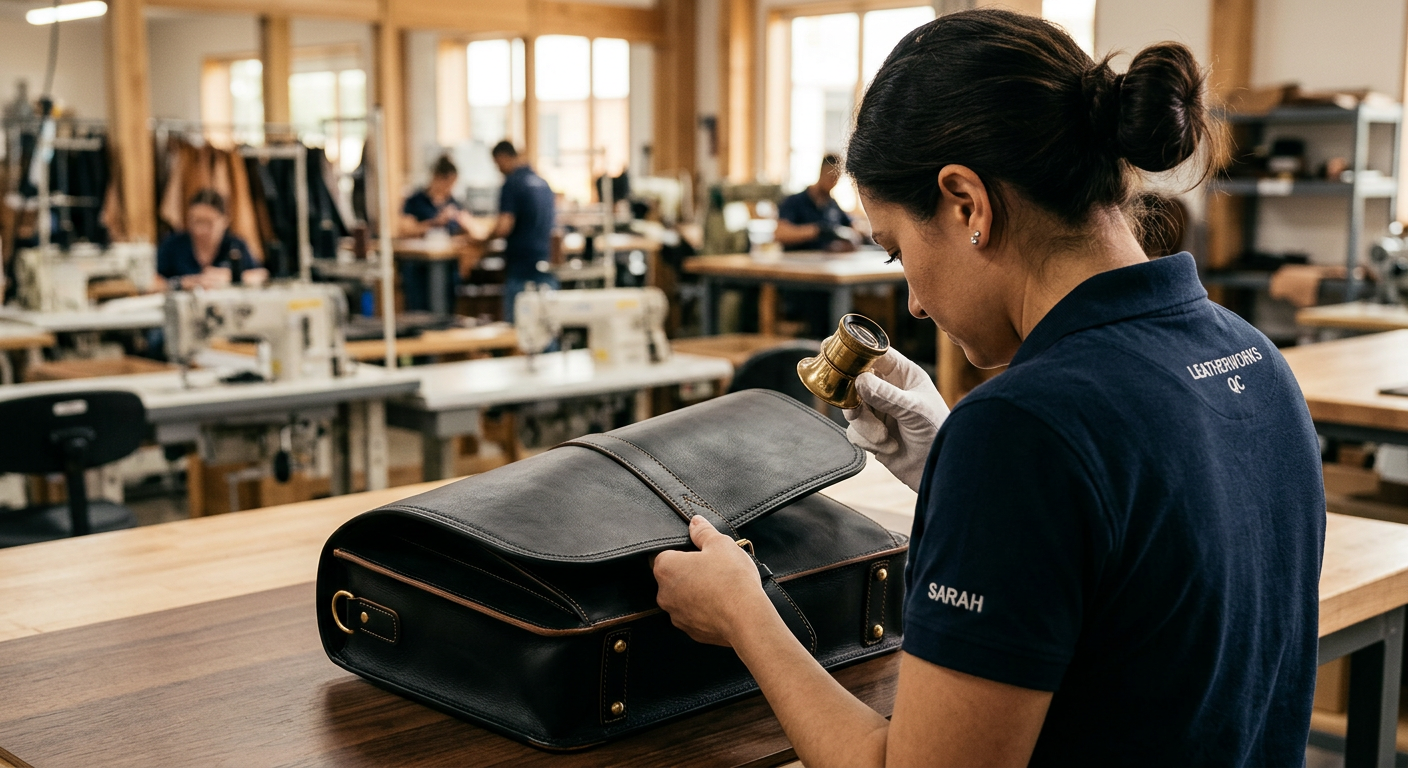
A successful leather factory audit is about verifying a supplier's capacity, quality systems, and compliance. Learn what we prepare for and what you should inspect to build a reliable partnership before placing an order.
The Buyer's Problem
Choosing a new manufacturing partner is one of the most significant decisions a brand can make. The images in a product catalogue look promising and the initial email communication may be prompt, but these are surface-level indicators. The real questions revolve around risk: Can this factory produce our designs to the required quality, consistently, and at scale? Will they meet our ethical standards? Will our shipment be on time, or will we face costly delays that jeopardise a seasonal launch? This uncertainty is precisely the problem that a comprehensive leather factory audit is designed to solve. It is an investment in de-risking your supply chain.
For serious buyers, moving from a promising sample to a bulk production order worth tens of thousands of pounds requires a deep-seated confidence in the supplier's capabilities. It’s about more than just the product; it’s about the people, the processes, and the physical infrastructure that stand behind it. This is the trust that a formal leather factory audit or an in-person visit is designed to build. It provides the verifiable proof needed to turn a potential supplier into a long-term strategic partner. Without it, you are essentially gambling with your brand's reputation and financial health.
What a "Leather Factory Audit" Actually Means on Our Factory Floor
In the leather goods industry, the term 'audit' can refer to two distinct activities. The first is a formal, third-party inspection conducted by firms like SGS, Bureau Veritas, or Intertek. These are highly structured assessments covering everything from social compliance (working hours, wages, safety) to Quality Management Systems (QMS) based on ISO 9001 principles. The second, and more common for many of our direct-brand clients, is a first-person buyer visit—an informal but equally detailed inspection. For us at the factory, we treat both with the same level of seriousness.
When we are notified of an upcoming audit, it is not a moment for panic. It is a moment for validation. Our preparation involves ensuring all our documentation is in order—material traceability records, QC inspection reports for recent orders, machine maintenance logs, and employee training records. On the factory floor, our teams ensure workstations are organised, safety equipment is in place, and that our quality control stations are fully operational with calibrated tools. A leather factory audit is an open-book examination for a factory that operates with integrity. It's an opportunity for us to demonstrate that the systems we describe in our emails are the same systems we use every single day to produce high-quality leather wallets and bags.
Materials, Specs and Standards
A critical part of any factory assessment is a deep dive into the raw materials and the technical standards that govern production. An experienced buyer will not just look at a finished sample; they will ask to see the leather hides in our climate-controlled storeroom, inspect the hardware we stock, and review the technical specifications we work to. This is where a factory’s commitment to quality becomes tangible. We welcome this scrutiny because it separates professional operations from corner-cutting workshops.
We maintain clear, documented standards for every stage of production, from material acceptance to final packing. These are not just internal benchmarks; they are commitments we make to our clients. For example, when a client specifies a particular Pantone colour for a handbag, we use spectrophotometers and controlled light boxes to ensure the dyed leather we receive from the tannery matches that standard within an agreed delta-E tolerance. Below is a table representing some of the key technical specifications we adhere to, which are often checked during a buyer's inspection.
| Specification Area | Our Standard / Tolerance | Why It Matters for Buyers |
|---|---|---|
| Stitch Per Inch (SPI) | 8-10 SPI for bags; 10-12 SPI for small goods like wallets | Ensures seam strength and provides a premium, refined look. |
| Leather Thickness | +/- 0.2mm tolerance from specified thickness (e.g., 1.2mm) | Guarantees consistency in the product's structure and feel. |
| Colour Consistency | Delta E < 1.5 against approved Pantone or swatch | Critical for brand consistency, especially for re-orders. |
| Edge Paint Application | 3-4 layers, sanded between coats, with no cracking on flex test | A key indicator of craftsmanship and product durability. |
| Hardware Plating | Minimum 48-hour salt spray test for anti-corrosion | Prevents tarnishing and failure, protecting brand reputation. |
| AQL for Final QC | Level II, AQL 2.5 for major defects, 4.0 for minor defects | A statistical, industry-standard method for ensuring quality. |
| Cutting Die Accuracy | +/- 0.5mm tolerance | Ensures all components fit together perfectly during assembly. |
| HTS Code Classification | Accurate classification (e.g., 4202.21 for leather handbags) | Prevents costly customs delays and fines for the importer. |
Our Process, Step by Step
Transparency in process is a cornerstone of trust. A buyer visiting our factory or engaging with us remotely should understand exactly how their project moves from a concept to a shipped reality. We have refined our production pathway over 25 years to be as clear and predictable as possible. It is a system designed to catch issues early, ensure alignment, and provide you with control at critical stages.
Here is the step-by-step journey your order takes with TAT Manufacture:
- Enquiry & Technical Review: You send us your tech pack, drawings, or a physical reference sample. We review the specifications and will likely ask technical questions to ensure we can execute your vision perfectly. We then provide a detailed FOB quote within 24-48 hours.
- Material Sourcing & Confirmation: Based on your specs, we source the exact leather, lining, and hardware. We send you a swatch card with all proposed materials for your physical approval before any sampling begins.
- Prototype Development (Counter-Sample): Our master pattern-makers create the patterns and our most senior artisans construct the first sample. This process typically takes 10-14 days. This is the first physical translation of your design.
- Sample Review & Iteration: We ship the sample to you. You review it and provide feedback. If minor adjustments are needed, we can often address them with notes and images. For major changes, a second sample may be required.
- Order Confirmation & Deposit: Once you approve the sample, you place your bulk order and transfer the deposit (typically 50% T/T). This secures your production slot and allows us to procure all the bulk raw materials.
- Pre-Production Sample (PPS) Approval: After we receive bulk materials, we produce ONE unit from the actual production line using the bulk materials and tooling. We send this PPS to you for final, absolute approval before the main production run starts. This is a critical quality gate.
- Bulk Production: Upon PPS approval, we proceed with the full order. This involves die-cutting, skiving, stitching, edge painting, and assembly, with in-line QC checks at each station.
- Final Quality Control: Once production is complete, our dedicated QC team inspects the entire batch based on the agreed AQL standard (e.g., AQL 2.5/4.0). We check for any aesthetic or functional defects.
- Packing & Final Inspection: Each item is cleaned, stuffed (if required), poly-bagged, and packed into export-worthy cartons. We welcome clients or their third-party inspectors to conduct a final inspection at this stage.
- Balance Payment & Shipment: Following your final inspection approval, you transfer the balance payment. We then manage the logistics to deliver the goods to the port and handle all export documentation for an FOB Chattogram shipment.
MOQs, Lead Times and Pricing Signals
During a supplier evaluation, the commercial terms are just as important as the production quality. Unrealistic promises on price or lead time are a significant red flag. We believe in being transparent about our numbers, as they are a direct reflection of our commitment to quality materials and ethical labour practices.
Our Minimum Order Quantity (MOQ) is 50 pieces per style, per colour. We have established this MOQ because it is the minimum required to be efficient in production and to meet the minimums imposed by our own suppliers for custom-dyed leather and hardware. It ensures that setting up a dedicated production line for your product is viable. For a more detailed breakdown of our terms, our Buyer FAQ page is a useful resource.
Regarding timelines, you can expect the following:
- Sampling: 10 to 14 days from confirmation of materials.
- Bulk Production: 25 to 45 days from the approval of the Pre-Production Sample (PPS). The exact duration depends on the order quantity and the complexity of the product. A simple cardholder will be faster than a complex, multi-pocket leather jacket.
All our pricing is quoted as FOB Chattogram (Chittagong), Bangladesh. This means our price includes the product itself, packed for export, and the cost of transport to the port of Chattogram, including clearing it through Bangladeshi customs. Your responsibility is to arrange and pay for the sea or air freight, insurance, and all costs associated with importing into your home country. Be wary of suppliers offering impossibly low prices. Often, this indicates the use of inferior split leather instead of full-grain, cheap hardware, or unacceptable labour conditions—something a thorough leather factory audit would quickly uncover.
Common Mistakes Buyers Make
After working with hundreds of brands over the years, from startups to established retailers, we have seen buyers make the same avoidable mistakes when vetting a new factory. Avoiding these pitfalls will save you time, money, and stress, and lead to a much stronger supplier relationship.
Providing an Incomplete Tech Pack: A vague tech pack with missing measurements or material details leads to incorrect samples and wasted time. The Fix: Invest time in creating a detailed tech pack with clear technical drawings, all dimensions, material specifications (leather type, thickness, lining fabric), hardware details, and branding application instructions.
Focusing Only on the "Golden Sample": A perfect sample is great, but it doesn't guarantee quality at scale. It could have been made by the single best artisan in the factory. The Fix: During a visit or video call, ask to see the main production line. Ask how the quality and process of the sample will be replicated across 500 units. Look at the systems, not just the single product.
Ignoring Social and Ethical Compliance: A supplier with poor labour practices poses a huge reputational risk to your brand. The Fix: Ask direct questions. What are the typical working hours? Do you have fire safety and evacuation plans? Can we see the employee facilities? Reputable factories like ours are proud to demonstrate a safe and fair working environment.
Not Clarifying Incoterms: A buyer assuming a price is CIF (Cost, Insurance, and Freight) when it is actually EXW (Ex-Works) can face thousands of pounds in unexpected shipping and logistics costs. The Fix: Always confirm the Incoterm (e.g., FOB, EXW, CIF) in writing and understand exactly what costs you are responsible for.
Fixating on the Lowest Unit Price: Choosing a factory because they are 10% cheaper can be a false economy. That saving is often lost many times over in dealing with poor quality, missed deadlines, and high defect rates. The Fix: Evaluate suppliers based on total value: quality, reliability, communication, and compliance—not just the FOB price.
Skipping the Pre-Production Sample (PPS): Approving bulk production based on the first prototype is risky. Material batches can vary slightly. The Fix: Always insist on approving a PPS. It is your last chance to catch any issues before hundreds or thousands of units are made.
How to Evaluate a Supplier for This
Whether you are on the ground at our facility in Bangladesh or conducting a remote evaluation, your goal is the same: to verify capability and build trust. A systematic approach is best. Use this checklist to structure your evaluation and ensure you are asking the right questions. This is the purpose of any good leather factory audit—to get past the sales pitch and see the reality of the operation.
- Communication Quality: Are their responses prompt, clear, and professional? Do they answer your technical questions with expertise, or are their answers vague?
- Technical Scrutiny: Do they ask you intelligent questions about your designs? A good manufacturer will probe for details to ensure they can produce it correctly. This is a sign of experience.
- Review Past Work: Ask to see their product gallery or, if possible, examples of recent production for other clients (with permission, of course). Look for the quality of stitching, edge finishing, and overall construction on products similar to yours.
- Material Sourcing Transparency: Ask where they source their leather and hardware. Do they have established relationships with tanneries and hardware suppliers? Can they provide material certification if required (e.g., REACH compliance)?
- Quality Control Process: Don't just ask if they have QC. Ask for the details. What AQL do they use? At how many stages do they inspect (incoming materials, in-line, final)? Ask to see their QC checklist and reports.
- Production Floor Organisation: In a video tour or visit, look for cleanliness and organisation. Are workstations tidy? Are leather hides stored properly? Is there good lighting? A chaotic floor often leads to chaotic production.
- Capacity and Subcontracting: Ask about their monthly production capacity. Crucially, ask if they subcontract any part of the process. You need to know who is actually making your product.
- Social Compliance: Discuss their policies on worker welfare, safety, and working hours. This is non-negotiable for modern brands.
Ready to move from research to samples? Send us your tech-pack or reference image and we'll come back within 24 hours with materials, MOQ and an FOB quote. Request a quote →
Case Snapshot
A direct-to-consumer brand from the UK, specialising in minimalist Scandinavian design, approached us in urgent need of a new supplier. Their previous partner in another country had suddenly failed a major retailer's social compliance audit, putting their entire upcoming season at risk. They needed to source a factory that could not only meet their high aesthetic standards for a new line of leather backpacks but also pass a rigorous ethical inspection from day one. Their timeline was extremely tight.
Due to travel restrictions, an in-person visit was impossible. Instead, we scheduled a multi-hour remote video leather factory audit. Our production manager walked their sourcing team through our entire facility via a live video stream. We showed them our leather stores, cutting presses, stitching lines, QC stations, and packing area. We held live Q&A sessions with our QC manager and pattern master. Following the virtual tour, we overnighted a comprehensive material book with various full-grain leather options and hardware finishes. Convinced by our transparency and infrastructure, they placed an initial order for 300 units across six SKUs (50 units per SKU). From that first email to the final goods being shipped FOB Chattogram, the entire process took just 75 days, including two rounds of sampling. They successfully launched their collection on time and we have since become their primary manufacturing partner.
Frequently Asked Questions
What is your pricing for a typical leather tote bag?
This is a common question, but the answer depends heavily on the specifics. A price can vary from £25 to over £80 based on four key factors: the leather (full-grain cowhide is more expensive than buffalo), the hardware (custom-branded solid brass vs. standard zinc alloy), the complexity of construction (number of pockets, lining type), and the order quantity. The best way to get an accurate price is to send us your tech pack or reference image.
Can you work with our custom-sourced leather?
Yes, we can. If a brand has a specific, proprietary leather they want to use, we are happy to work with it. However, before confirming an order, we would need to receive a sample of the material to test its workability on our machines. We need to assess how it cuts, skives, and stitches. Using client-supplied material (CSM) can also impact the final price and our production lead times, which we would clarify in our quote.
How do you ensure consistent quality across a 1,000-piece order?
Consistency at scale is achieved through process, not chance. It begins with the approved Pre-Production Sample (PPS), which becomes the 'master standard'. Our line supervisors have a copy of the PPS at the start of the production line. We then have multiple in-line QC checkpoints: after cutting, after skiving/splitting, post-stitching, and during final assembly. Finally, our independent QC team inspects 100% of the items, then performs a final random inspection based on AQL 2.5/4.0 standards before packing. This multi-layered approach ensures consistency from the first unit to the last.
What are the shipping options from Chattogram?
We ship FOB Chattogram Port. From there, you have two main options: sea freight or air freight. Sea freight is far more economical but slower, typically taking 30-40 days to reach European or North American ports. Air freight is much faster, often 7-10 days, but significantly more expensive and usually reserved for urgent top-up orders or high-value small goods. We work with your designated freight forwarder to ensure a smooth handover at the port.
Do you offer design services, or do I need a full tech pack?
We are a production facility, not a design agency. Therefore, the best starting point is always a detailed technical pack. However, we understand that many founders, especially at new brands, may not have this. If you have clear reference images, detailed sketches, and a list of requirements, our sampling team can work with you to build a technical specification and create a prototype. This is part of our custom / OEM / private-label programme.
What makes a good factory for a social compliance audit?
It comes down to transparency, documentation, and a genuine culture of safety and respect. Specifically, an auditor will check for: legally compliant wage records and working hours, no child or forced labour, accessible and clearly marked fire exits, functional fire extinguishers, safe and clean worker facilities (toilets, drinking water), and proper use of safety gear. This is what an auditor looks for during a social compliance leather factory audit, and we ensure these systems are not just for show, but are part of our daily operations.
Next Step
Understanding what to look for in a factory audit is the first step towards building a secure and reliable supply chain. The next is to put that knowledge into practice with a potential partner who welcomes the scrutiny. If our commitment to process and quality aligns with your brand's needs, we encourage you to take the next step.
Review our full range of leather bags to see the level of craftsmanship we deliver. When you are ready, send us your design specifications so we can begin the conversation. Request a quote today and let us show you how we build products, and partnerships, that last.
Ready to manufacture
Request a quote from TAT Manufacture
Full-grain leather, low MOQ from 50 pcs, OEM & private label. Get a detailed itemised quote within 24 hours.
25 years of leather manufacturing craftsmanship.
Services →OEM, private label, and custom leather production.