The Difference Between Handmade, Handcrafted, and Machine-Made Leather Products
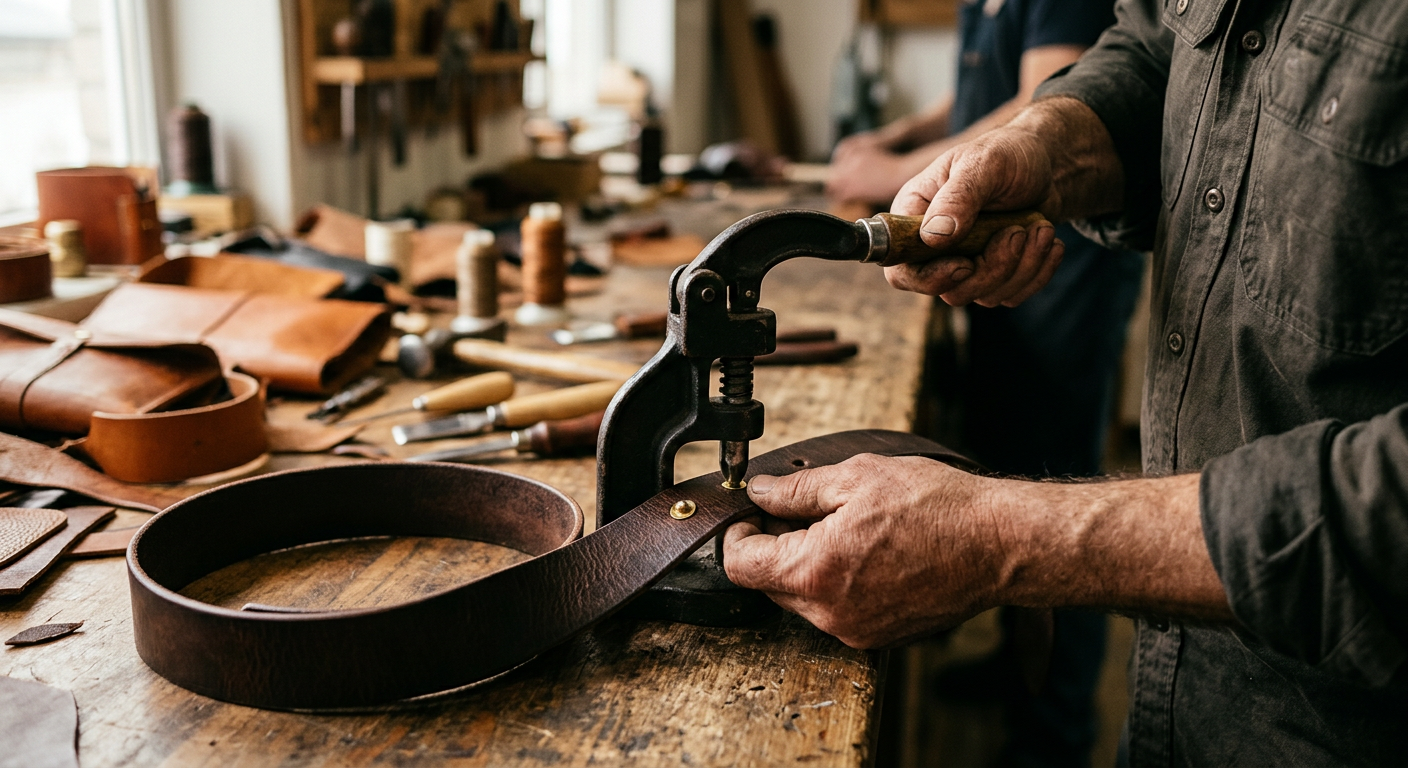
As a factory, we clarify the terms 'handmade', 'handcrafted', and 'machine-made' for buyers. Understand how these labels impact the production, quality, and cost of your next leather goods order.
The buyer's problem
When sourcing a manufacturing partner, the terms 'handmade', 'handcrafted', and 'machine-made' are used frequently, but often interchangeably and incorrectly. This creates significant problems for brands and buyers. You might request a quote for handmade leather products expecting artisanal quality, only to receive a price based on mass production, leading to mismatched expectations on quality, cost, and lead times. This ambiguity makes it difficult to compare quotes from different factories and can result in an end product that doesn't align with your brand's positioning or quality standards.
For a serious buyer, understanding the real-world manufacturing differences behind these labels is not just a matter of semantics; it is fundamental to effective sourcing. It dictates the skill level of the labour required, the machinery used on the factory floor, the final cost per unit, and the scalability of your production run. Choosing a supplier who is not transparent about their processes can lead to quality fade on reorders, unexpected production delays, and a product that ultimately fails to connect with your customer. Getting this right from the start is critical for building a reliable and profitable supply chain.
What “Handmade Leather Products” Actually Means in a Factory
In our 25 years of manufacturing, we have seen these terms cause more confusion than any other. As your production partner, it is our job to provide clarity. Here is how we define these methods from a factory-floor perspective, which is what truly matters for your order.
Machine-Made: This is the most automated process, designed for high volume and consistency. Key operations are performed by specialised machinery.
- Cutting: Leather is cut using hydraulic clicking presses with steel dies or by computer-numerical-control (CNC) laser cutters. This is extremely fast and precise, with minimal material wastage.
- Stitching: Sewing is done on high-speed, often computerised, sewing machines (like Juki or Brother) that can be programmed for specific patterns. This ensures a uniform stitch count (stitches per inch) across thousands of units.
- Finishing: Edges are typically folded and stitched ('turned edge') or trimmed and lightly sealed. This is efficient but offers a less refined finish.
- Best for: High-volume orders of simple items like basic wallets, promotional goods, or components where cost and speed are the primary drivers.
Handcrafted: This is the method we employ for the vast majority of premium goods we produce. It represents a blend of skilled human artisanship and the efficiency of modern machinery. This is the sweet spot for most fashion brands seeking quality at a scalable price.
- Cutting: While we may use die cutters for main body panels to ensure consistency, intricate pieces, straps, or specific placements on a unique hide are often cut by hand by a skilled craftsman.
- Stitching: Main structural seams are typically sewn on industrial machines for strength and speed. However, decorative stitching, attaching handles, or working in tight corners might be done on slower, more specialised post-bed or cylinder-arm machines operated by an experienced technician, or in some cases, stitched by hand.
- Finishing: This is where the 'hand' in handcrafted truly shows. Edge painting (applying multiple layers of edge paint by hand and sanding between coats), burnishing (using a tool and wax to seal and polish the leather edge), and skiving (thinning the leather edge by hand for a clean fold) are all manual processes. Setting hardware like rivets, buckles, and magnetic snaps is also meticulously done by hand using presses or specialised tools.
- Best for: Premium leather bags, backpacks, and accessories where fine details, durability, and a high-quality feel are paramount. It is the core of our custom / OEM private-label programme.
Handmade (or Fully-Handmade): This is the domain of individual artisans or small workshops, not scalable B2B manufacturing. The term implies that every single step is performed by hand without the use of electric machinery.
- Cutting: All patterns are cut by hand using a blade.
- Stitching: Every seam is stitched by hand, typically using the 'saddle stitch' method with two needles. This is incredibly durable but also extremely slow. A single wallet can take a full day to stitch.
- Finishing: All edges are burnished or finished by hand. There is no machine involvement.
- Best for: Bespoke, one-of-a-kind items or very small batch (<10 pieces) artisanal collections. While we have the skills for this, it is not commercially viable for B2B orders at our 50-piece MOQ due to the immense labour cost and time.
Understanding this distinction is the first step in creating an accurate tech-pack and receiving a meaningful quote.
Materials, Specs and Standards
The chosen production method directly influences material selection and achievable quality standards. For instance, a fully machine-made product might use a corrected-grain leather that behaves predictably with automated cutters, whereas a handcrafted item allows us to strategically cut from a piece of full-grain leather to highlight its unique character.
The specifications in your tech-pack must reflect the desired method. Requesting hand-burnished edges on a product you have budgeted as 'machine-made' will immediately create a disconnect. Our role is to review your specifications and advise on the most effective production path to achieve your desired outcome within your target cost window. We adhere to strict internal standards which we align with your tech-pack's requirements during pre-production.
Here is a table illustrating how key specifications differ across production methods:
| Specification | Machine-Made | Handcrafted (Our Standard) | Fully Handmade (Artisanal) |
|---|---|---|---|
| Stitching Type | Lockstitch (Machine) | Lockstitch (Machine), Hand-stitching for details | Saddle Stitch (Hand) |
| Stitches Per Inch (SPI) | 8-10 (Uniform) | 7-9 (Variable by area) | 5-7 (Larger, more robust) |
| Edge Finish | Turned & Stitched, Raw Cut | Multi-layer Hand-Painted, Hand-Burnished | Hand-Burnished, Creased |
| Hardware Attachment | Automated Rivet Machine | Hand Press, Manual Screw-in | Hand Press, Hand-Peened Rivets |
| Cutting Method | Die Press / Laser | Hand-cutting + Die Press | 100% Hand-cut with blade |
| Production Scalability | Very High (1000s of units) | High (50 - 5000 units) | Very Low (<20 units) |
| Typical HTS Code | e.g., 4202.21 (Bags) | e.g., 4202.21 (Bags) | e.g., 4202.21 (Bags) |
| Unit Cost | £ | ££ | ££££ |
Our Process, Step by Step
Transparency is key to a successful partnership. We want you to know exactly how your order moves from a design concept to a shipment leaving the port. This is our standard operating procedure for every handcrafted leather goods order.
Enquiry & Tech-Pack Review: You send us your technical pack, drawings, or a physical reference sample via our contact form. Our team reviews the materials, construction, hardware, and branding requirements within 24 hours. We identify any potential production challenges and confirm if the design is viable.
Quotation & Material Sourcing: We provide a detailed FOB quote based on your specifications and order volume. We also propose suitable leather types (e.g., full-grain cowhide, nappa sheepskin) and hardware options from our network of trusted tanneries and suppliers, sending you swatches for approval.
Sample Development (10-14 days): Once the quote is agreed upon, we create a pre-production sample. This is a physical, fully-finished product made to your exact specifications. This crucial step allows you to assess the quality of our materials and workmanship firsthand. This is where we perfect the handcrafted details.
Sample Feedback & Approval: You receive the sample and provide feedback. We can make one round of revisions based on your comments. Upon your final approval of the sample, you confirm the full order and transfer the deposit.
Pre-Production & Cutting: We hold a pre-production meeting with the heads of cutting, stitching, and finishing to review the approved sample and your tech-pack. The production leather is inspected for flaws, and the patterns are cut—using a combination of hand-cutting for detail and die-cutting for core components to ensure accuracy.
Assembly & Stitching: The cut leather pieces are skived, glued, and assembled by our skilled team. The product is then stitched on appropriate industrial sewing machines. Any decorative hand-stitching or complex assembly is performed at specialised workstations.
Finishing & Final QC: This is our most labour-intensive stage for handmade leather products. Edges are painted or burnished by hand, hardware is meticulously attached, straps are fitted, and logos are embossed or foiled. Each item then undergoes a rigorous 3-stage quality control inspection to check for defects in stitching, finishing, hardware, and dimensions against the approved sample.
Packing & Boxing: Each product is cleaned, stuffed (if required), and packed in an individual polybag and then into inner cartons, and finally into a 5-ply master export carton to prevent damage during transit. We label cartons according to your requirements.
Final Inspection & Shipment: We can accommodate a final inspection by your own team or a third-party agency (like SGS or Intertek). Once approved, we manage the logistics to deliver the consignment to the port. Our standard term is FOB Chattogram, Bangladesh.
MOQs, Lead Times and Pricing Signals
Understanding the commercial realities of production is as important as understanding the craft. Here are our standard terms, designed to be accessible for both emerging and established brands.
Minimum Order Quantity (MOQ): Our MOQ is 50 pieces per style, per colour. This is significantly lower than many large-scale factories, allowing you to test new designs or launch collections with less initial investment. For a complex product like a leather jacket, this flexibility is a major advantage.
Lead Times: Timeframes are directly linked to complexity and order size. Our typical schedule is:
- Sampling: 10 to 14 working days from confirmation of materials.
- Mass Production: 25 to 45 working days from sample approval and receipt of deposit. A simple machine-stitched cardholder might take 25 days for 1,000 pieces, while a complex, hand-finished tote bag may require 45 days for 200 pieces.
Pricing Signals & Incoterms: All our pricing is quoted as FOB Chattogram Port (CGP), Bangladesh. This means we are responsible for the goods, including all local transport and port loading costs, until they are loaded onto the shipping vessel. You are responsible for the ocean freight, insurance, and all costs thereafter.
The price of a product is determined by three main factors: materials, labour, and complexity. This is where the 'handcrafted' element becomes a key pricing signal. A wallet with machine-turned edges might cost £8.00 per unit. The exact same wallet design, but with edges that are sanded, painted with three layers of Italian edge paint, and polished by hand, might cost £10.50. This £2.50 difference is almost entirely due to the skilled labour and time required for that single finishing process. Being specific about these details in your RFQ is the only way to get an accurate price.
Common Mistakes Buyers Make
Over the years, we've seen buyers make the same handful of avoidable mistakes. Steering clear of these will make your sourcing process smoother and more successful.
Using Vague Terminology: Asking for "high quality" or "handmade" without defining what that means in a spec sheet.
- The Fix: Be specific. Instead of "handmade," specify "saddle-stitched handles" or "hand-painted edges with three layers and polished finish."
Unrealistic Budget for Stated Quality: Expecting fully handmade, artisanal features at a mass-production price point.
- The Fix: Be transparent about your target landed cost. We can then value-engineer the product, suggesting where to use handcrafted techniques for maximum impact and where to use machine processes to manage cost.
Ignoring the Sample Revision Process: Approving a sample with minor issues, assuming they will be fixed in production.
- The Fix: Treat the pre-production sample as the final product. Scrutinise every detail and provide clear, consolidated feedback for any revisions. The final production will replicate the approved sample.
Poorly Detailed Tech-Pack: Providing a single photo and asking for a price. This is the most common cause of inaccurate quotes and production errors.
- The Fix: Invest time in creating a detailed tech-pack. Include flat drawings with measurements, material callouts, hardware specifications, stitching details (SPI), and branding placement. The more detail you provide, the better.
Underestimating Shipping and Duty Costs: Focusing solely on the FOB price and getting a surprise when total landed costs are calculated.
- The Fix: Engage a freight forwarder early in the process to get estimates for shipping, insurance, customs duties (based on HTS codes), and local delivery. For many Western countries, Bangladesh enjoys preferential duty rates (GSP status), which can be a significant cost advantage.
Not Factoring in Handwork Time: Planning a product launch with a timeline based on fully-automated production when the product includes significant hand-finishing.
- The Fix: Discuss lead times with us specifically in the context of the handcrafted elements required. We will give you a realistic production schedule based on our capacity and the complexity of the task.
How to Evaluate a Supplier for This
When you are assessing a potential factory for its handcrafted capabilities, you need to look beyond their website and marketing materials. You are vetting their ability to deliver consistent, high-quality manual work at scale. Here is your checklist:
Ask for Their Definition: Start by asking the sales or development manager how they define 'handcrafted' versus 'handmade'. A good supplier will give you a clear, honest answer similar to the one we've outlined above.
Request Specific Samples: Don't just ask for a random sample. Ask for a product that showcases the specific techniques you require. For example, if you need hand-painted edges on a leather belt, ask for a sample of a belt with that exact feature.
Scrutinise the Details: When you receive the sample, ignore the overall design and focus on the craft. Is the edge paint smooth and even? Is the stitching straight and consistent? Is the hardware set securely and without scratches? These are the tells of a skilled workforce.
Request Production Videos or Photos: Ask the factory to share short video clips of their workers performing the specific handcrafted tasks in question—edge painting, skiving, attaching hardware. This shows you the real environment and skill level. Our own factory gallery provides a glimpse into our operations.
Discuss Their QC Process for Handwork: How do they ensure consistency across 500 hand-burnished wallets? A good factory will have a multi-stage QC process, with checks after each major handcrafted step, not just at the final packing stage.
Enquire About Worker Training: Ask how they train their staff on these specific skills. Skilled labour is the backbone of any handcrafted operation. A factory that invests in its people, like we do at TAT Manufacture, is more likely to deliver consistent quality.
Conduct a Trial Order: The ultimate test is a small order. Our 50-piece MOQ is designed for this. It allows you to test our capabilities on a real order with minimal risk before committing to a larger volume.
Ready to move from research to samples? Send us your tech-pack or reference image and we'll come back within 24 hours with materials, MOQ and an FOB quote. Request a quote →
Case Snapshot
A German startup brand approached us to produce a new line of minimalist handmade leather products, specifically a unisex leather backpack. Their design was clean, but their brand identity was built on a unique, matte-finish, hand-painted edge in a custom Pantone colour. They had received quotes from factories in China and India, but the MOQs were over 500 pieces per style, and the costs for the custom edge finish were prohibitive. They were seeking a partner who could deliver premium finishing at a more accessible scale.
We received their tech-pack and reference images. We first sourced the specific semi-vegetable tanned, full-grain cowhide they wanted and then developed a custom edge paint to match their Pantone reference. The initial sample was created in 12 days. The client was impressed with the edge finish and the overall construction quality but requested a small change to the strap attachment point for better ergonomics. We updated the design and sent a revised sample which was approved immediately. They placed an initial order for 150 backpacks (50 units in three different colourways). The full production run took 40 days. The goods were shipped FOB Chattogram and arrived in Hamburg 35 days later. The brand successfully launched their collection, selling out their initial run in two months, and has since placed two re-orders with us, each for a larger volume.
Frequently Asked Questions
How does the level of handwork affect the price?
Directly and significantly. Labour is a primary cost driver. A process done by hand, like saddle-stitching a handle or painting an edge, can take 10-20 times longer than a machine-equivalent process. The price difference reflects the time and skill of the craftsperson required to execute that task to a high standard. We always itemise these costs in our quotes so you can see exactly what you are paying for.
Can we meet your MOQ of 50 pieces with complex handcrafted details?
Yes, absolutely. Our production lines are specifically designed for this kind of flexible, high-mix manufacturing. While very complex designs may have a slightly higher unit price at the 50-piece level, we are fully equipped to handle intricate, handcrafted work even for our minimum order quantity.
How are samples handled for custom handmade leather products?
We charge a sample fee, which is typically 2x the quoted bulk production price per unit. This covers the higher cost of material sourcing for a single unit and the dedicated time of our senior sample makers. This fee is 100% refundable against your bulk order when it exceeds a certain value (e.g., £5,000).
What are the shipping terms and logistics from Bangladesh?
Our standard term is FOB (Free on Board) Chattogram Port. This means we handle all production, packing, and transportation to the port, including loading the goods onto the vessel. You (or your freight forwarder) are responsible for ocean freight, insurance, customs clearance, and duties in your country. We can provide carton weights and dimensions to help you get accurate shipping quotes.
How do you ensure quality control on handcrafted elements?
We use a multi-stage QC system. A dedicated QC inspector checks the product at critical points: post-cutting, post-stitching, and post-finishing. For handcrafted elements like edge painting, each layer is inspected before the next is applied. A final AQL (Acceptable Quality Limit) inspection is performed on the entire batch before packing to ensure it matches the approved pre-production sample.
Can you replicate a fully handmade product I've seen?
We can replicate the aesthetic and quality of a fully handmade product using our handcrafted method. However, we cannot replicate it at a commercial price if it requires 100% hand-stitching. We would typically propose a solution that uses machine stitching for durability and efficiency on main seams, while using hand-finishing techniques to achieve the same premium look and feel.
Next Step
Understanding the nuanced differences between production methods is the foundation of a successful sourcing strategy. Now that you are equipped with the right vocabulary and expectations, the next step is to put it into practice. Review your product designs and decide which level of craft aligns with your brand and price point.
When you are ready to get a quote for your next collection, whether it's a line of intricate leather wallets or durable bags, we are here to help. Send us your technical pack, and we will provide a transparent, detailed quotation based on the real work required. Request a quote today →
Ready to manufacture
Request a quote from TAT Manufacture
Full-grain leather, low MOQ from 50 pcs, OEM & private label. Get a detailed itemised quote within 24 hours.
25 years of leather manufacturing craftsmanship.
Services →OEM, private label, and custom leather production.