Leather Manufacturing
How Modern Leather Factories Balance Speed, Quality, and Cost
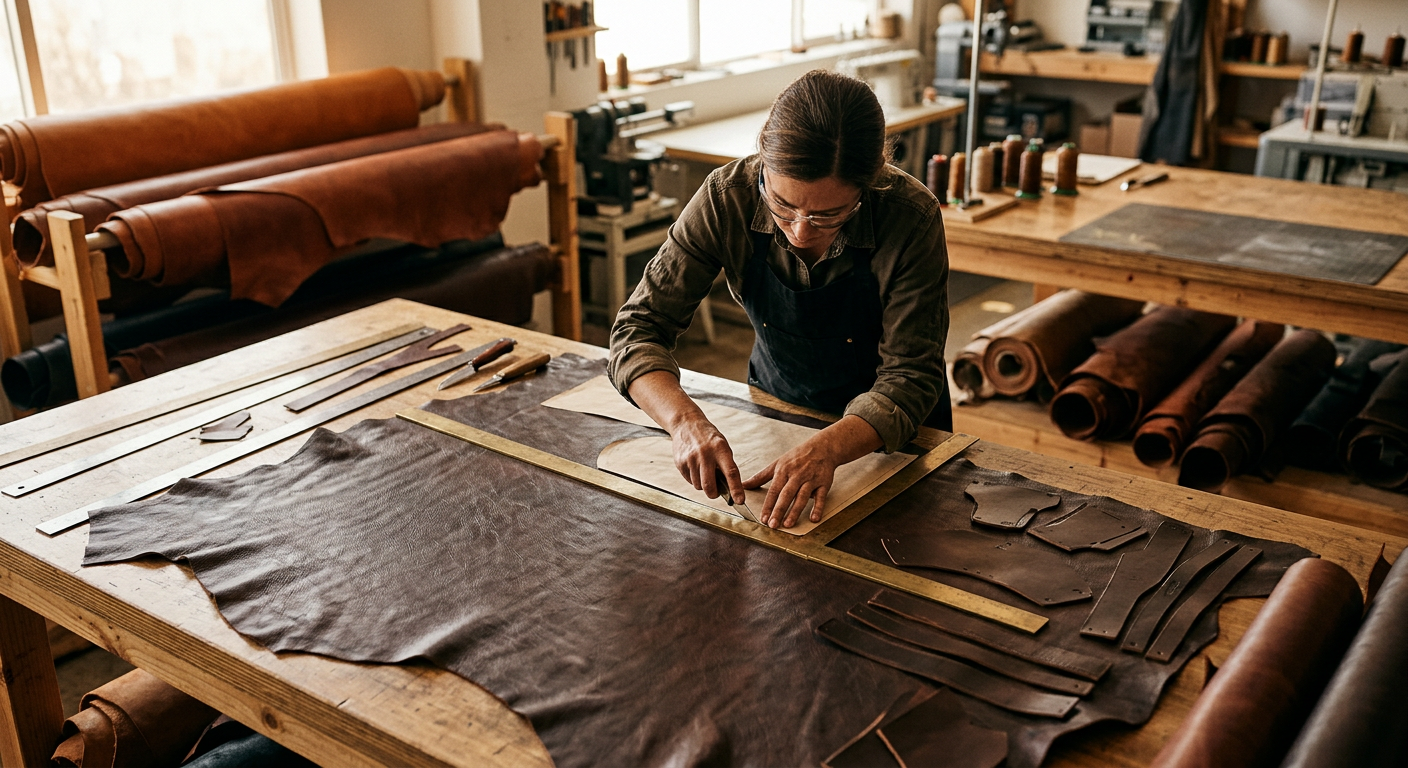
Sourcing leather goods is a balance of speed, cost, and quality. Discover how our factory's focus on genuine leather manufacturing efficiency delivers premium products on time, without compromise.
The buyer's problem
As a brand founder or sourcing manager, you face a constant triad of competing pressures: speed-to-market, cost of goods, and non-negotiable quality. Opt for the cheapest, fastest factory, and you risk receiving a shipment of poorly stitched bags with inconsistent finishing, jeopardising your brand's reputation. Choose a high-end artisanal workshop, and while the quality may be exquisite, the high costs and slow production can make your products uncompetitive or cause you to miss key selling seasons. This is the central challenge in sourcing leather goods.
The search is not for the cheapest or the fastest, but for the smartest partner. A truly valuable manufacturer understands that sustainable success lies in the balance. They have invested in systems and skills that create leather manufacturing efficiency, not by cutting corners, but by eliminating waste, optimising workflow, and leveraging experience. Finding a factory that has mastered this balance is the key to scaling your brand profitably and reliably, ensuring the product that lands in your warehouse is exactly what you approved months earlier.
What "Leather Manufacturing Efficiency" Actually Means in a Factory
The term leather manufacturing efficiency is often misunderstood. It is not about making workers stitch faster or using lower-grade materials to save a few pennies. For a reputable factory like ours, efficiency is a holistic system built over decades. It is the methodical reduction of waste in all its forms: wasted material, wasted time, wasted motion, and wasted potential. It is the difference between a chaotic workshop and a streamlined production facility.
On our factory floor, this translates into tangible practices. It begins with intelligent pattern nesting. Using specialised software, we lay out the cutting patterns for leather wallets or bag components on a hide to achieve the highest possible yield, minimising off-cuts. This directly impacts your unit cost. It continues with dedicated production lines for specific tasks. Instead of one artisan performing ten different steps, we have specialists for skiving, edge painting, stitching, and hardware attachment. This specialisation breeds speed and, more importantly, accuracy and consistency. Every station is equipped with the correct tools and machinery, calibrated and maintained to prevent downtime.
Furthermore, efficiency is about proactive problem-solving. Our 25 years of experience, detailed in our About TAT Manufacture page, means we can often spot potential design flaws during the tech-pack review stage. A handle attachment point that looks good on paper but will fail under stress, or a chosen leather thickness that is incompatible with a design's tight corners – identifying these issues before a sample is even made prevents costly and time-consuming revisions down the line. It's an efficiency born from expertise, not just process.
Materials, specs and standards
Clarity is the bedrock of efficiency. A production run can be severely delayed or result in high defect rates simply because of ambiguous specifications. A 'good quality' zip is subjective; a 'YKK #5 coil zip in antique brass finish' is a precise instruction. As your manufacturing partner, we work from a detailed technical specification sheet, or tech-pack, to ensure we are aligned on every component before production commences. This document is the single source of truth.
When we receive a tech-pack, we review it against our internal standards and the practical realities of production. We question everything to prevent ambiguity. This ensures that the pre-production sample is right the first time and that bulk production is a direct, scalable replication of that approved sample. The table below outlines some of the key specifications we define to ensure a predictable, high-quality outcome. Adherence to these standards is a core part of our leather manufacturing efficiency.
| Specification Area | Our Standard / Tolerance | Impact on Efficiency & Quality |
|---|---|---|
| Stitch Count | 8-10 Stitches Per Inch (SPI) | Ensures durability without perforating the leather; machine calibration prevents variations. |
| Leather Thickness | +/- 0.2mm tolerance from spec | Consistent thickness is crucial for skiving, folding, and assembly; prevents bulky or weak seams. |
| Edge Paint Application | 3-4 layers, sanded between coats | Creates a smooth, durable, and professional finish; prevents cracking and chipping. Rushing this step is a false economy. |
| Hardware Plating | Minimum 2-micron plating thickness | Ensures hardware (buckles, studs) resists corrosion and wear, reducing potential quality claims. |
| Reinforcement Material | Texon or similar bonded cellulose board | Used in bases and flaps to provide structure without adding excessive weight or cost. Proper selection is key. |
| Thread Specification | Gütermann Mara 30 or 50 (or equivalent) | High-tensile, bonded polyester/nylon thread prevents fraying and breakage on high-speed machines. |
| Cutting Method | Die-cut for high volume, hand-cut for complex shapes | Using steel dies for standard parts ensures perfect uniformity and speed; hand-cutting allows for precision on bespoke items. |
| Harmonised System (HTS) Code | e.g., 4202.21 for Handbags with outer surface of leather | Correctly identifying the HTS code upfront prevents customs delays and unexpected duty charges. |
Our process, step by step
Transparency in process is critical for building trust. We want our clients to understand exactly how their product moves from a concept to a packed carton ready for shipment. Our methodology is designed for clarity, accountability, and efficiency at every stage.
Enquiry and Initial Quote: You send us your tech-pack, design drawings, or a physical reference sample. Within 24-48 hours, we provide an initial FOB quote based on the design, estimated materials, and order quantity. We also confirm if your design is feasible as is or requires modification.
Tech-Pack Finalisation: We work with you to refine the tech-pack, clarifying all materials, hardware, dimensions, and construction details. This is the most critical step to ensure a smooth production run.
Material Sourcing and Confirmation: We source leather, lining, hardware, and thread samples based on your specifications. We send these to you for physical approval. No bulk materials are ordered until you have signed off on the exact components.
Pre-Production Sample (PPS) Creation: Once materials are approved, our master artisans create a single, perfect sample. This PPS represents exactly what you will receive in bulk. This typically takes 10-14 days. We photograph it extensively and ship it to you for final approval.
PPS Approval & Production Deposit: You review the physical sample. Upon your approval, we require a production deposit (typically 50%) to secure the bulk materials and schedule your production slot. This is the point of no return for design changes.
Bulk Cutting and Preparation: With the approved sample as our guide, we proceed to bulk production. Leather is inspected for flaws and then cut using dies or by hand. Components are skived, edges are prepped, and reinforcement is applied.
Assembly and Stitching: The cut components move to our specialised assembly lines. Teams work on specific stages—panel stitching, gusset attachment, strap making, lining insertion—to maintain consistency and speed.
Quality Control (QC): We perform QC at multiple stages. An in-line QC team checks components as they move through assembly. A final QC team inspects 100% of finished goods, checking against the approved PPS for stitching, dimensions, hardware function, and overall finish.
Cleaning, Packing, and Final Payment: Each item is cleaned, stuffed with paper to hold its shape, and packed in a polybag, then into export-grade cartons. We issue a packing list and commercial invoice. The final balance payment is due at this stage, prior to shipment.
Shipment and Documentation: We transport the goods to the port and handle all export documentation to deliver them to your freight forwarder (FOB Chattogram, Bangladesh). We provide you with the Bill of Lading and other necessary shipping documents for customs clearance in your country.
MOQs, lead times and pricing signals
Our operational structure is geared towards providing premium quality for serious brands, which is reflected in our Minimum Order Quantities (MOQs), lead times, and pricing. These figures are not arbitrary; they are the result of a carefully calibrated system that maximises leather manufacturing efficiency for the specific type of work we do.
Our MOQ is 50 pieces per style, per colour. This quantity allows us to achieve production efficiency. For example, setting up a steel cutting die, calibrating stitching machines for a specific thread and needle combination, and creating a mini-assembly workflow all have upfront time costs. Spreading this setup over 50 units makes the per-unit cost viable. Anything less, and the setup time would make each piece prohibitively expensive. This MOQ is ideal for brands testing new designs, established brands offering a wider variety of colours, or for high-value items like our leather jackets.
Our lead times are realistic and built on a foundation of quality control:
- Sampling: 10-14 days from confirmation of all materials. This allows sufficient time for our pattern makers and sample artisans to interpret your design correctly and construct a high-quality first sample.
- Mass Production: 25-45 days from the approval of the pre-production sample and receipt of the deposit. The exact time within this range depends on three factors: order quantity, design complexity, and the current production schedule. A simple cardholder will be on the 25-day end; a complex, multi-compartment leather backpack will be closer to 45 days.
Our pricing is quoted as FOB Chattogram. FOB (Free On Board) means our price includes manufacturing the goods to your specification, packing them in export cartons, and delivering them past the ship's rail at the port of Chattogram, Bangladesh. The buyer is responsible for the main sea/air freight, insurance, and all import duties/taxes at the destination. This is a standard Incoterm for international trade and provides clear divisions of cost and responsibility. Our pricing reflects the use of quality raw materials, skilled labour, and a robust QC process—it is a signal of quality, not a race to the bottom.
Common mistakes buyers make
Over our 25 years in business, we have seen buyers, both new and experienced, make recurring mistakes that cause delays, increase costs, and lead to frustration. By being aware of these, you can ensure a much smoother sourcing experience.
Providing an Incomplete Tech-Pack: A tech-pack with missing dimensions, unspecified hardware, or vague material descriptions (e.g., 'brown leather') is the primary cause of delays. The Fix: Create a comprehensive tech-pack with every detail specified. If you are unsure, ask us. We can help fill in the blanks based on your design goals.
Unrealistic Cost Expectations: Sending a photo of a luxury brand's £2,000 bag and asking for an FOB price of £30 is a common occurrence. The Fix: Understand the drivers of cost: leather quality, hardware complexity, construction time, and order quantity. We are happy to suggest cost-engineering options, like simplifying a design or using alternative materials, to meet a target price without crippling quality.
Making Design Changes After Sample Approval: Requesting a change to a pocket placement or strap length after the pre-production sample has been approved and bulk cutting has begun is extremely disruptive. The Fix: Treat the pre-production sample as final. Test it thoroughly. Any changes must be made before giving approval for bulk production to start.
Underestimating Material Constraints: Demanding a very structured tote bag be made from soft, supple lambskin is a design contradiction. The Fix: Trust your manufacturer's advice on materials. We understand how different leathers behave. We can guide you to a material that achieves your aesthetic goal while being suitable for the product's construction and intended use.
Ignoring Shipping and Duty Costs: A great FOB price can be soured by unexpectedly high freight and import tax costs. The Fix: As soon as you have our estimated carton dimensions and weights, get quotes from your freight forwarder and check your country's import duty rates for the relevant HTS code (e.g., 4202.21 for leather handbags).
Pushing for Unrealistic Timelines: Asking for a 15-day production turnaround on a 1,000-piece order is not feasible without rushing and compromising quality. The Fix: Respect the stated lead times. They include buffer for QC and potential minor issues. Plan your buying calendar with realistic manufacturing and shipping timelines in mind.
How to evaluate a supplier for this
When you are comparing potential manufacturers, you need a clear set of criteria to assess their real-world capabilities for balancing speed, quality, and cost. Look beyond the website and the initial price quote. Here is a practical checklist to help you evaluate a factory's true efficiency and reliability:
Assess Their Communication: How quickly and clearly do they respond to your initial enquiry? Do they ask intelligent questions about your tech-pack, or just give a price? A good partner engages in a dialogue to prevent future problems. Their ability to communicate effectively is a strong indicator of their internal organisation.
Scrutinise the Sample: The first sample is a factory's audition. Do not just look at the overall product. Check the details: Is the stitching straight and even? Is the edge paint smooth? Does the hardware feel solid? Is it an exact match to your tech-pack? A factory that gets the sample right demonstrates its attention to detail.
Discuss Their QC Process: Ask them to describe their quality control procedures in detail. How many QC checkpoints are there? Do they have a dedicated QC team, or do workers check their own output? What is their typical defect rate? A factory proud of its quality will be transparent about its process.
Enquire About Material Sourcing: Where do they source their leather and hardware? Do they have established relationships with tanneries and hardware suppliers? This affects material consistency, cost, and availability. A factory with a weak supply chain will face constant delays.
Request a Factory Tour (Virtual or Physical): The best way to judge a factory is to see it in action. If you can't visit in person, request a detailed video walkthrough. Look for cleanliness, organisation, modern machinery, and safe working conditions. You can see some of our facility in our factory gallery.
Verify Their Experience with Your Product Type: A factory that specialises in leather belts may not be the best choice for complex leather jackets. Ask for examples of past work that is similar to your product. This proves they have the specific skills required.
Give Them a Problem to Solve: During your discussions, present a hypothetical production challenge. For example, "What would you do if a batch of leather arrived from the tannery with too much colour variation?" A good factory will have a clear contingency plan, such as informing the client immediately, quarantining the material, and working with the tannery for a replacement. Their answer reveals their problem-solving ability and integrity.
Ready to move from research to samples? Send us your tech-pack or reference image and we'll come back within 24 hours with materials, MOQ and an FOB quote. Request a quote →
Case snapshot
A German startup brand approached us to manufacture their inaugural collection of minimalist leather bags, consisting of one tote and one crossbody design. Their initial order was for 250 pieces of each style in black and tan full-grain cowhide, for a total of 1,000 bags. Their primary concerns were achieving a luxury finish on a startup budget and launching in time for the autumn/winter season. Their initial tech-pack was well-detailed, but our team identified a potential weakness in the strap attachment point on the tote, which could fail under heavy load. We proposed a minor design change, adding an internal reinforced stitch-box, and demonstrated the difference in the pre-production sample. The client approved the change, grateful for the proactive fix. We sourced the specified German hardware and Italian leather, and after sample approval, the production of 1,000 bags was completed in 40 days. The goods were inspected with an AQL 2.5 standard, passed, and shipped FOB Chattogram. The client received the shipment with 6 weeks to spare before their launch, allowing ample time for their own marketing and distribution. This is a prime example of how collaborative partnership and production expertise lead to a successful outcome.
Frequently asked questions
How is your pricing structured?
Our pricing is quoted on a per-piece basis in USD, under FOB Chattogram Incoterms. This price includes all materials, manufacturing, quality control, and packing into export cartons delivered to the port. It does not include ocean/air freight, insurance, import duties, or any local taxes in your country. Pricing is dependent on materials, complexity, and final order quantity. Higher volumes can lead to better per-piece pricing due to economies of scale.
Can we supply our own leather or hardware?
Yes, clients can supply their own materials, which is known as a CMT (Cut, Make, Trim) arrangement in part or full. However, we strongly advise against it for first-time orders. If you choose to do so, you are responsible for the quality, timely delivery, and logistics of getting those materials to our factory in Bangladesh, including any import duties on those components. Delays in your supplied materials will directly impact the production schedule. We recommend allowing us to source materials for a smoother process, as outlined in our custom / OEM programme.
What is the sample process and cost?
We create a pre-production sample for every new design. The cost for a sample is typically 2x the bulk production price per piece, plus shipping costs. For example, if a bag's bulk price is £40, the sample cost would be £80. This higher cost covers the artisan's time, pattern creation, and administrative overhead for a single unit. This sample fee is usually credited back to you if you proceed with a bulk order that meets the MOQ. The process is detailed in our main Buyer FAQ.
How does shipping and customs work?
Under FOB Chattogram terms, our responsibility ends once the goods are loaded onto the vessel nominated by you. You will need to hire a freight forwarder in your country to manage the international shipping, insurance, and customs clearance. We provide all necessary export documents, including the Commercial Invoice, Packing List, and Bill of Lading, which your forwarder will need to clear customs. We always classify products with the correct HTS code to ensure a smooth customs process.
How do you ensure quality control during production?
We have a multi-stage QC process. First, all incoming raw materials are inspected. Second, we have in-line QC inspectors who check the products at critical assembly stages (e.g., after stitching, before lining is closed). Finally, a separate final QC team inspects 100% of the finished goods before packing, checking them against the approved pre-production sample for any defects in materials, construction, or finishing. This rigorous process is fundamental to our operation and a key aspect of our overall leather manufacturing efficiency.
What are the limits of customisation?
Our factory is built for customisation. You can specify the leather type, colour, and finish; lining material and colour; thread colour; hardware style and finish; and custom branding elements like debossing, foil stamping, or woven labels. We can develop entirely new designs from a sketch or modify existing styles from our catalogue. The main limitations are physical—some design ideas are not structurally sound or practical to manufacture, and we will provide guidance on this during the development phase.
Next step
Understanding how a modern leather factory balances its operations is the first step toward finding a reliable, long-term production partner. The next step is to see how our process and principles can apply to your specific product needs. If you are ready to get a detailed quote and begin the sampling process, please send us your project details.
To discuss your designs, please request a quote via our contact form. If you need ideas or want to see the types of products we specialise in, a good place to start is our collection of leather bags.
Ready to manufacture
Request a quote from TAT Manufacture
Full-grain leather, low MOQ from 50 pcs, OEM & private label. Get a detailed itemised quote within 24 hours.
25 years of leather manufacturing craftsmanship.
Services →OEM, private label, and custom leather production.