Buying Guide
How Material Selection Impacts the Final Cost of Leather Products
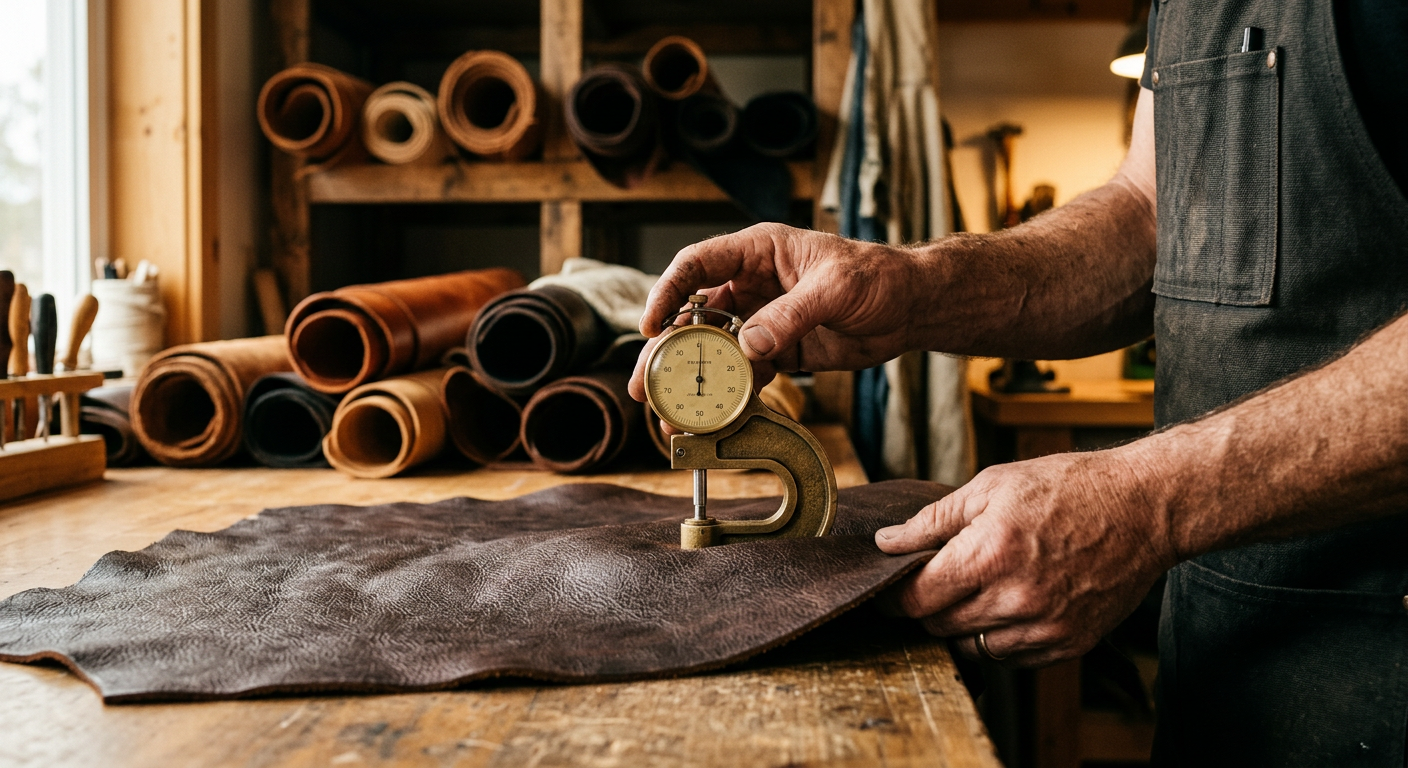
A factory-direct guide for B2B buyers on how leather grades, hardware, linings, and specifications directly influence the final FOB price of your leather goods.
How Material Selection Impacts the Final Cost of Leather Products
The buyer's problem
As a brand owner or sourcing manager, you have a target retail price for your product. To achieve that, you need a specific ex-factory cost. You send your tech-pack to three different manufacturers and receive three vastly different quotes, leaving you to question who is overcharging and who is cutting corners. The truth is often that each factory has interpreted your material requirements differently, or has a different sourcing capability. Understanding the components of leather material cost is the single most important factor in navigating this process and achieving your target price without sacrificing the integrity of your design.
This is not about finding the 'cheapest' supplier; it is about finding the 'right' supplier who can achieve your desired quality within your commercial framework. The final cost of a leather bag or wallet is not arbitrary. It is a direct calculation based on specific, quantifiable choices you make before production ever begins. Misunderstanding these choices leads to sampling delays, budget overruns, and friction with your manufacturing partner. Our goal is to demystify this process, giving you the vocabulary and knowledge to have a productive, cost-effective conversation with us from your very first enquiry.
What "leather material cost" actually means in a factory
When we discuss leather material cost on the factory floor, we are referring to much more than the price per square metre on an invoice from a tannery. For us, the true cost is the 'cost per unit', which is a function of two key variables: the raw material price and the material yield.
1. Raw Material Price: This is the baseline cost and is influenced by several factors:
- Animal & Origin: A hide from an Italian calf will cost significantly more than a hide from a Brazilian cow or a Pakistani buffalo, due to differences in farming, hide quality, and tanning expertise.
- Grade: Hides are graded based on the number of imperfections (scars, insect bites). A Grade-A 'full-grain' hide with a clean surface is the most expensive as it requires the highest quality raw material. A Grade-C 'corrected-grain' hide, which has been sanded and embossed to hide flaws, is more affordable.
- Tanning Method: Chrome-tanned leather is faster and generally cheaper to produce than vegetable-tanned leather, which is a longer, more traditional process requiring costlier natural tannins.
- Finish: Specialised finishes like pull-up, patent, or metallic foils require additional processes and chemicals, adding to the cost.
2. Material Yield (Wastage): This is the most overlooked component of leather material cost by brands. Leather is a natural material with irregular shapes and unique flaws. Our cutters cannot use every square centimetre. The percentage of the hide that can be used for your product is the 'yield'. A small product like a cardholder might achieve a high yield (low wastage), while a large, single-panel tote bag requires clean, large sections of hide, resulting in lower yield (higher wastage) as the cutter must work around imperfections. For a typical leather bag, we might calculate a wastage factor of 25-35%, which is factored directly into the unit cost. A lower-grade hide with more flaws will result in an even lower yield, sometimes negating the initial savings from the cheaper raw material.
In essence, the final cost contribution from the leather is calculated as: (Price per sq. metre / Yield %) x Square metres per unit. As your manufacturing partner, our role is to help you select a material that balances these factors to meet your aesthetic, functional, and budgetary needs.
Materials, specs and standards
To ensure consistency from sample to bulk production, every detail must be quantified. A vague instruction like "use good quality hardware" is subjective. A specific instruction like "use YKK #5 zipper in antique brass finish" is a manufacturing instruction we can act on. We work from detailed technical specifications to ensure there is no ambiguity. Below is a table representing the kind of detail we look for in a tech-pack and use for our internal Quality Control.
| Specification Component | Our Standard / Common Range | Impact on Cost |
|---|---|---|
| Leather Grade & Type | Full-Grain, Top-Grain, Split, Nubuck, Suede | High (The single largest cost driver) |
| Leather Thickness | 1.2mm - 1.4mm (for bags); 0.8mm - 1.1mm (for wallets) | Medium (Thicker hides cost more per sq. ft.) |
| Stitch Per Inch (SPI) | 8-10 SPI for strength; 10-12 SPI for aesthetics | Low (but indicates quality level) |
| Edge Finish | Raw Cut, Edge Painted (e.g., Fenice), Folded Edge | Medium (Painting is labour-intensive) |
| Hardware Material | Zinc Alloy (standard), Brass (premium), Stainless Steel (high-end) | High (Solid brass can cost 5-10x zinc alloy) |
| Lining Material | Cotton Drill (standard), Polyester, Suede Microfibre | Medium (Microfibre can be as costly as some leathers) |
| Thread Type & Thickness | Bonded Nylon (e.g., Coats Gral), Tex 70 for bags | Low (but critical for durability) |
| HTS Code (Example) | 4202.21 (Handbags with outer surface of leather) | N/A (Determines import duty for the buyer) |
Clear specification is the foundation of a successful production run. When we receive a tech-pack, we review it against these standards and will raise questions or suggest alternatives to help you meet your target cost. This collaborative approach is a key part of our custom / OEM / private-label programme.
Our process, step by step
We have refined our process over 25 years to be as transparent and efficient as possible for our clients. Here is what you can expect when you partner with TAT Manufacture:
Enquiry & Tech-Pack Review: You send us your design brief, tech-pack, or a physical sample via our contact page. We review all specifications, assessing complexity and material requirements. We typically respond within 24 hours to confirm receipt and ask any initial questions.
Material Sourcing & Quotation: Based on your specs, we identify suitable materials from our network of tanneries and suppliers. We prepare a detailed FOB (Free On Board) quote that breaks down the unit cost, sample cost, and estimated lead times.
Sample Development: Upon your approval of the quote, we create a counter-sample. Our dedicated sampling team translates your tech-pack into a physical product. This is a critical stage to test patterns, construction, and material choices.
Sample Approval & Order Confirmation: We ship the sample to you for evaluation. You provide feedback for any revisions. Once you are 100% satisfied and sign off on the final 'sealing sample', you place your bulk order and we issue a Proforma Invoice.
Bulk Material Procurement: With the order confirmed, we purchase all the necessary materials in bulk – leather hides, linings, hardware, threads, and packaging. This is a key step where locking in the exact, approved materials is crucial.
Cutting & Skiving: The approved leather hides are inspected on our light tables for flaws. Our skilled cutters then use patterns and clicking presses to cut the individual components, carefully planning the layout to maximise yield. Edges are skived (thinned) where necessary for clean seams.
Stitching & Assembly: The cut pieces move to our stitching lines. Depending on the product, this involves table-top sewing machines, post-bed machines for complex shapes, and skilled hand-stitching for certain details. This is where products like our leather wallets come to life.
Finishing & Quality Control: The assembled products undergo final finishing touches, such as edge painting, hardware attachment, and final cleaning. Our QC team then inspects every single item based on the approved sealing sample and your tech-pack specifications.
Packing & Labelling: Each approved unit is packed according to your requirements (e.g., polybag, dust bag, hang tags). Cartons are labelled for export, ready for shipment.
Shipping & Documentation: We manage the logistics to transport the goods to the port. We handle all export documentation and load the container. Our responsibility ends once the goods are loaded onto the vessel at Chattogram Port (FOB Chattogram). We then provide you with the Bill of Lading and other shipping documents needed for customs clearance in your country.
MOQs, lead times and pricing signals
Understanding our production parameters helps you plan your inventory and launch dates effectively. We have structured our operations to be flexible enough for emerging brands while being robust enough for established retailers.
Minimum Order Quantity (MOQ): Our standard MOQ is 50 pieces per style, per colour. For example, for a tote bag offered in black and tan, the minimum order would be 50 black units and 50 tan units. This MOQ allows us to source materials efficiently from tanneries and dedicate a production line for assembly without excessive setup costs. For custom-developed leather colours, the tannery's minimums may require a higher order quantity, which we will discuss with you upfront.
Lead Times: Time is a critical component of cost. Our lead times are:
- Sampling: 10-14 days from confirmation of all details and receipt of payment for samples. This can be faster if all materials are in stock, or longer if custom hardware or leather needs to be developed.
- Bulk Production: 25-45 days from the approval of the sealing sample and receipt of the advance payment. The exact time depends on the order quantity, product complexity, and material availability. A simple belt will be on the lower end, while a complex leather jacket with custom quilting will be on the higher end.
Pricing Signals & Incoterms: All our pricing is quoted as FOB Chattogram (also known as Chittagong), Bangladesh. This means the price includes the cost of the product, packing, and delivery to the port of loading. You, the buyer, are responsible for the main carriage (sea/air freight), insurance, and any import duties or taxes in your destination country. We can recommend freight forwarders but the contract is yours. This is the most common and transparent incoterm in B2B manufacturing, giving you control over your shipping costs.
The price we quote is a direct reflection of the materials and labour required. If a quote seems high, it often signals a high-cost material specification (like Italian vegetable-tanned leather) or complex construction. If it seems low, it's wise to double-check the material specs to ensure quality has not been compromised. A productive conversation about the leather material cost and its alternatives is the fastest way to align our quote with your target.
Common mistakes buyers make
Over our 25 years in business, we've seen buyers make the same avoidable mistakes that lead to delays and increased costs. Here are the most common, and how to fix them:
Mistake: Providing vague tech-packs. Instructions like "use brown leather" or "nice-feeling lining" are not actionable and lead to incorrect samples.
- Fix: Be specific. Specify the leather type (e.g., cowhide), finish (e.g., milled), thickness (e.g., 1.2mm), and provide a Pantone reference for colour (e.g., Pantone 19-1218 TCX). Do the same for hardware and linings.
Mistake: Underestimating the cost of hardware and linings. A brand focuses 100% on the outer leather, only to be shocked by the cost of solid brass buckles or a high-end microfibre suede lining.
- Fix: Treat hardware and linings as primary cost components. Ask for options during quoting. A zinc alloy buckle might be 80% cheaper than a solid brass one, offering a significant saving with minimal aesthetic change for some designs.
Mistake: Choosing an inappropriate material for the product's function. Specifying a soft, delicate lambskin for a heavy-use leather backpack will lead to product failures and customer returns.
- Fix: Discuss the product's end-use with us. We can recommend leathers that offer the right balance of feel, durability, and cost for the application. Our experience can prevent costly post-sale problems.
Mistake: Requesting major changes after the sealing sample is approved. Changing a material or a key measurement after we have ordered bulk materials can be very costly and may require a new quote and lead time.
- Fix: Treat the sampling process with diligence. Review every stitch, measurement, and material on your sample. The approved sample is the contract for bulk production. Get it right before you sign off.
Mistake: Ignoring material yield. Designing a large tote bag with a single, flawless front panel will be very expensive due to the low yield and high wastage from even the best hides.
- Fix: Design for manufacturability. Consider adding a central seam or other design elements that allow our cutters to use the leather more efficiently. We can advise on design tweaks that can reduce your unit cost without compromising the design.
Mistake: Focusing only on the FOB price. A low FOB price from a supplier might be negated by high import duties if they have misclassified the product with the wrong HTS code.
- Fix: Ask your supplier what HTS code they will use on the export documentation. Verify this code with your customs broker to accurately forecast your total landed cost.
Ready to move from research to samples? Send us your tech-pack or reference image and we'll come back within 24 hours with materials, MOQ and an FOB quote. Request a quote →
How to evaluate a supplier for this
When you are comparing factories, you are not just comparing price, you are comparing expertise, transparency, and sourcing capability. Use this checklist to evaluate a potential manufacturing partner's ability to manage material costs effectively:
- ☐ Do they ask detailed questions about your tech-pack? A good supplier will challenge ambiguity. If they just give you a price on a vague spec, be wary. They should be asking about leather thickness, hardware material, edge finishing, and lining weight.
- ☐ Can they provide a cost-breakdown? Ask for a basic breakdown between leather, hardware, lining, and labour/CMT (Cut, Make, Trim). A transparent partner will be able to provide this, showing you where the cost is concentrated.
- ☐ Do they offer material alternatives? A knowledgeable factory should be able to say, "The Italian calf you specified is excellent but puts you 15% over target. We suggest this Brazilian top-grain which has a similar feel and will meet your target price. Would you like a swatch?" This is a sign of a true partner. We document these options in our Buyer FAQ.
- ☐ Do they have a clear sampling process and cost structure? Understand how they handle samples and revisions. Is the sample cost credited back on a bulk order? A professional factory has a formal process for this.
- ☐ Ask about their leather sourcing. Do they have established relationships with multiple tanneries, or are they just buying from a local open market? A broad sourcing network gives them (and you) access to more options for quality and cost.
- ☐ Can you see examples of their work with different materials? Our factory & product gallery is a starting point, but we can also provide specific examples relevant to your product. Look for consistency in stitching, edge finishing, and overall construction across different types of leather goods.
Case snapshot
A start-up brand from Germany approached us to produce a line of minimalist leather bags they had designed. Their initial tech-pack specified a premium full-grain vegetable-tanned leather from a well-known Italian tannery, along with solid brass hardware. Based on these specifications, our initial quote for their target order of 300 units (across three styles) resulted in a unit cost that was 40% higher than their budget allowed for. The brand was disheartened, believing their project was not viable.
Instead of simply losing the project, we scheduled a call. We confirmed their priority was the minimalist aesthetic and the soft, structured feel of the bag. We explained that the specified Italian leather was the primary cost driver. We proposed a solution: we sourced a high-quality, semi-vegetable-tanned full-grain cowhide from a trusted tannery in Argentina that we had worked with for years. It offered 90% of the character at about 60% of the cost. We also suggested a high-quality zinc alloy hardware with a premium PVD coating that perfectly mimicked the look of aged brass but was significantly more cost-effective. We created two new samples. The client was delighted that we had achieved the desired look and feel while bringing the final FOB unit cost within 5% of their original target. The order was placed, and production was completed in 35 days, shipping FOB Chattogram. The brand successfully launched and has since placed three re-orders, gradually increasing quantities.
Frequently asked questions
How much does a sample cost?
Sample costs are typically 2-3 times the quoted bulk unit price. This is because we must source small quantities of materials at non-bulk prices, and dedicate our senior sample makers to the project, interrupting production flow. This cost covers the materials and labour to get a perfect representation of your product. For most orders over a certain value, we credit the sample fee back against your bulk order invoice.
Can you source a specific leather for me, or a custom colour?
Yes. We have a wide network of tanneries in Bangladesh, Pakistan, India, and South America, and can source from Italy upon request. If you have a specific tannery or leather article in mind, let us know. For custom colours, most tanneries require a minimum order quantity of 300-500 square feet. This is usually enough leather for about 100-150 medium-sized bags, so custom colours are best suited for orders that meet or exceed this volume. For smaller orders (our MOQ is 50pcs), it is most cost-effective to choose from the tannery's stock colour range.
How does changing the leather grade affect the price?
Changing from a top-grain to a full-grain leather might increase the unit cost by 15-25%, due to the higher raw hide cost and potentially lower yield. Conversely, moving from a full-grain to a high-quality corrected grain could reduce costs by a similar margin. We can quote your product in several leather options to show you the direct impact of this choice on your final cost.
What are your payment terms?
For bulk production, our standard terms are a 50% advance payment to confirm the order and procure materials, with the remaining 50% balance due upon completion of production and before the goods are shipped. We will provide a full packing list and photos of the completed production run for your approval before requesting the balance payment. We find this provides security for both parties. You can learn more about our history and stability on our About TAT Manufacture page.
How do you ensure quality control during production?
We have a multi-stage QC process. First, all incoming materials like leather and hardware are inspected. Second, we have in-line QC during cutting and stitching to catch errors early. Third, there is a 100% final inspection of every finished unit before it is packed. This final inspection is conducted by a separate team that uses your approved sealing sample and tech-pack as their guide. We welcome third-party inspectors hired by our clients to visit our factory at any stage of production.
Next step
Understanding how your material choices impact price is the first step towards a successful and profitable partnership. The next is to put this knowledge into action. Send us your tech-pack or design ideas, and let's start a conversation about bringing your product to life within your budget.
Request a quote today and let us show you how our expertise can make a difference for your next line of leather wallets or other accessories.
Ready to manufacture
Request a quote from TAT Manufacture
Full-grain leather, low MOQ from 50 pcs, OEM & private label. Get a detailed itemised quote within 24 hours.
25 years of leather manufacturing craftsmanship.
Services →OEM, private label, and custom leather production.