Buying Guide
How Factory Prototypes Save Brands Time and Money
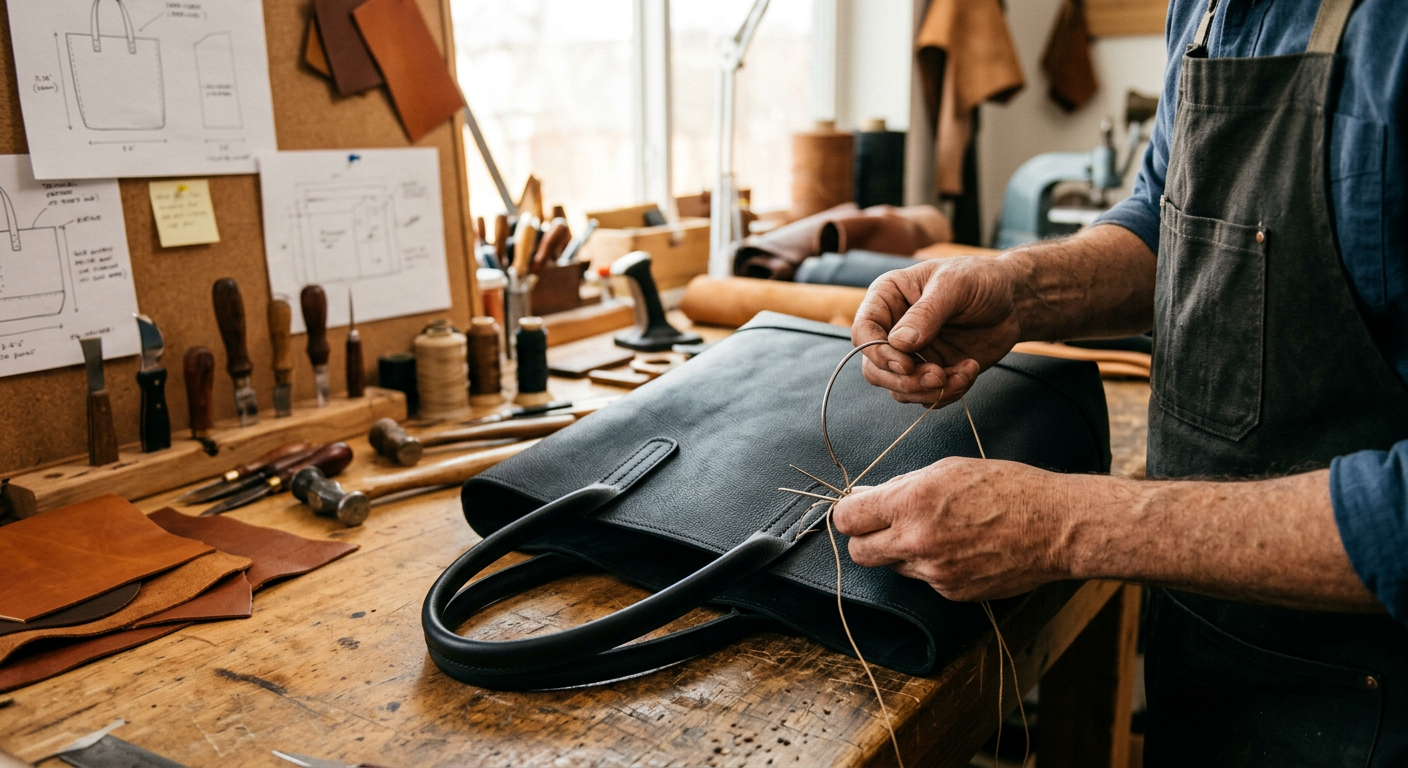
We explain how our factory's leather prototype development process works, from tech pack to pre-production sample, saving you from costly errors and delays in your supply chain.
The Buyer's Problem
For any brand, the journey from a design concept to a market-ready product is filled with potential pitfalls. The single most expensive mistake a brand can make is committing to a full production run based on a drawing and a prayer. A misunderstanding of a technical specification, an unforeseen issue with material compatibility, or a flaw in the pattern can result in thousands of units that are unsellable. This isn't just a financial loss; it's a loss of market opportunity, a delay in your collection launch, and a significant blow to your brand's reputation with retailers and end customers.
This is precisely why a structured leather prototype development process is not an optional extra but a fundamental stage of risk management. Choosing a manufacturing partner is not just about their ability to sew in bulk; it is about their ability to collaborate, problem-solve, and translate your vision into a physical, functional, and commercially viable product. A factory that rushes this stage or treats it as an afterthought is signalling a disregard for your investment. A true partner, however, understands that the prototype is the foundation upon which a successful production run is built.
What Leather Prototype Development Truly Involves on Our Factory Floor
In the context of a specialised factory like ours, leather prototype development is a comprehensive engineering and testing phase. It is far more than simply creating a one-off “sample” to show you what the product looks like. It is the first physical manifestation of your tech pack, and its purpose is to test every assumption made on paper. This process is handled by a dedicated team, separate from our main production lines. It involves our most experienced pattern makers, senior stitching artisans, and our head of production.
When we begin a prototype, we are essentially conducting a trial run of the entire manufacturing process on a micro-scale. We create the initial patterns, often by hand, to test the drape and structure of the design. We cut the first pieces of leather to see how the chosen hide behaves. We test the proposed hardware—buckles, zips, rivets—to ensure they function correctly and fit the aesthetics. Every seam is analysed for strength, every edge for its finish, every pocket for its functionality. The goal is to identify and solve problems before they can be replicated across 50, 500, or 5,000 units. This critical stage is where we refine the construction methods, finalise the material bill, and create the master pattern that will be used to ensure consistency in bulk production.
Materials, Specs and Standards
Precision in the prototype stage depends entirely on clear specifications. A vague request like “a brown leather wallet” is open to interpretation and will lead to wasted time. A detailed tech pack is the blueprint we work from. It should specify everything from the type and grade of leather to the thread colour and hardware finish. As your manufacturing partner, we can certainly advise on material choices to meet a target cost or performance standard, but the initial direction must come from you.
For example, when developing one of our custom leather bags, we consider the Harmonized Tariff Schedule (HTS) code early on, as it impacts duties. A leather handbag under HTS code 4202.21 has different implications than a textile bag with leather trim. We work to these granular details. We expect our clients to have a clear vision, and we provide the manufacturing expertise to realise it within strict, agreed-upon tolerances. The table below outlines some of the typical specifications we work with during the leather prototype development phase.
| Specification | Our Standard / Tolerance | Buyer Implication |
|---|---|---|
| Leather Thickness | +/- 0.2mm from specified gauge (e.g., 1.2-1.4mm) | Affects the product's structure, weight, and feel. |
| Stitch Per Inch (SPI) | +/- 1 SPI from specification (e.g., 8-10 SPI) | Determines seam strength and aesthetic finish. |
| Colour Matching | Pantone (TCX) reference; assessed under D65 lighting | Ensures colour consistency with your brand's palette. |
| Edge Paint Application | Minimum 3 layers, with sanding between each | Critical for a premium, durable finish that won't crack or peel. |
| Hardware Plating | Adherence to specific micron thickness; salt spray tests | Guarantees durability and resistance to tarnish or corrosion. |
| Pattern Tolerance | +/- 1.5mm on master patterns | Ensures every piece cut for the bulk order is identical. |
| Adhesive Application | No visible residue on final product | A key indicator of clean, high-quality craftsmanship. |
| Component Alignment | Pockets, logos, and straps aligned within 2mm | Guarantees a symmetrical and professionally finished product. |
Our Process, Step by Step
Transparency is key to a successful partnership. We have refined our development process over 25 years to be as clear and efficient as possible for our clients. Here is the exact path your project will take from initial enquiry to final shipment:
- Enquiry & Tech Pack Review: You contact us with your design, ideally a full tech pack including drawings, dimensions, material specs, and hardware requirements. Our team reviews it within 24 hours to confirm feasibility and ask any initial clarifying questions.
- Quotation & Confirmation: We provide a detailed quote for both the prototype and the estimated bulk production price per unit, including Incoterms (typically FOB Chattogram). Once you approve the quote and remit the prototype fee, we move forward.
- Material Sourcing & Swatching: We source the specified leathers, linings, and hardware. If an exact match isn't available, we propose the closest alternatives and can send you physical swatches for approval before cutting.
- Pattern Making & Die Creation: Our master pattern maker translates your tech pack into physical patterns. For a first prototype, these are often cut by hand. For approved designs moving to bulk, we create steel cutting dies for perfect consistency.
- Prototype Assembly: Our most senior artisans, who specialise in new product development, construct the first unit. This is a meticulous process, documented at each stage to identify potential efficiencies or challenges for the main production line.
- Internal Quality Control: Before the prototype is ever sent to you, it undergoes a rigorous internal review by our head of production and a QC manager. They check it against every point in the tech pack, from stitch count to pocket dimensions.
- Dispatch & Client Feedback: We ship the prototype to you via a tracked courier like DHL or FedEx. We then await your detailed feedback. We encourage you to test it, use it, and scrutinise it. Is the strap comfortable? Does the laptop sleeve fit? Is the branding placed correctly?
- Revisions & Pre-Production Sample (PPS): Based on your feedback, we make any necessary adjustments. If the changes are minor, we might confirm them with photos. If they are significant, we will create a second revised prototype. The final, approved version is signed off by you as the 'Pre-Production Sample' (PPS). This PPS becomes the gold standard against which every bulk unit will be measured.
- Bulk Production Commencement: Upon receipt of your deposit for the bulk order and your formal approval of the PPS, we begin mass production. The approved patterns, materials, and construction techniques are passed to the relevant production lines.
- Final QC, Packing & Shipment: Each unit from the bulk order is checked against the approved PPS. Once passed, the goods are packed to your specifications, and we manage the logistics to get them to the port of Chattogram for shipment.
MOQs, Lead Times and Pricing Signals
Understanding the commercial realities of manufacturing is essential for planning your business. We pride ourselves on being accessible to both established brands and growing businesses, which is why our Minimum Order Quantity (MOQ) is 50 pieces per style, per colour.
Lead Times:
- Leather Prototype Development: Typically 10-14 working days from payment confirmation and finalisation of all material details. This can be longer if highly specialised materials need to be sourced from overseas.
- Bulk Production: Typically 25-45 working days after the approval of the Pre-Production Sample (PPS) and receipt of the bulk order deposit. The exact time depends on the order quantity, complexity of the product, and our current production schedule.
Pricing Signals: The cost of a prototype is not the same as the per-unit cost in a bulk run. A prototype usually costs 2 to 3 times the bulk unit price. This is not a profit-making exercise for us; it reflects real costs. The prototype is made by our highest-paid artisans, requires sourcing small quantities of materials at non-bulk prices, and involves significant time from our production managers and pattern makers. We view this as a shared investment in getting the product right. For orders over 500 units, we typically credit the prototype fee against your bulk order invoice, effectively making the sample free.
All our pricing is quoted as FOB Chattogram (Chittagong), Bangladesh. This means we are responsible for all costs to get your finished goods loaded onto the vessel at the port. You are responsible for the shipping, insurance, and any import duties or taxes in your destination country. We can, of course, recommend freight forwarders we have worked with.
Ready to move from research to samples? Send us your tech-pack or reference image and we'll come back within 24 hours with materials, MOQ and an FOB quote. Request a quote →
How to Evaluate a Supplier for Leather Prototype Development
When you are comparing potential factory partners, look beyond the final price. The quality of their leather prototype development process is a direct indicator of the quality of your final product. Here is a checklist to help you evaluate a supplier's capabilities:
- Do they have dedicated prototype specialists? Ask who physically makes the samples. Is it a specialised team or just a regular worker from the production line? A dedicated team signifies a commitment to quality development.
- Can they provide a detailed, step-by-step process? A professional factory will have a clear, documented workflow from tech pack to PPS approval. Vague answers are a red flag.
- How do they communicate? Look for proactive communication. Do they ask clarifying questions about your tech pack, or do they just quote a price? Good questions show they are thinking through the manufacturing process, not just trying to win the order.
- Are they transparent about costs? They should be able to clearly explain why a prototype costs what it does, and what their policy is on crediting this fee against a bulk order.
- Can they show you their work? Ask to see examples of past prototypes or products from their factory gallery. Look at the stitching, edge finishing, and overall construction quality.
- How do they handle material sourcing and alternatives? A good partner will have a strong network of tanneries and hardware suppliers. They should be able to offer sensible alternatives if your specified material is unavailable or doesn't fit your target cost.
- What is their feedback and revision process? How do they document your requested changes? A structured process prevents misunderstandings and ensures the final PPS is exactly what you approved.
Common Mistakes Buyers Make
We have seen thousands of projects come through our factory, and we often see brands make the same preventable mistakes. Avoiding these can save you considerable time, money, and frustration.
- Providing an Incomplete Tech Pack: A sketch on a napkin with a few notes is not a tech pack. This leads to guesswork, multiple failed prototypes, and delays.
- The Fix: Invest time in creating a detailed tech pack with technical drawings, precise measurements, material types, hardware specifics, and branding placement. The more detail you provide, the faster and more accurate your prototype will be.
- Unrealistic Expectations on a Budget: Requesting Italian full-grain leather and Swiss-made zips for a product with a very low target cost is not feasible.
- The Fix: Be upfront about your target cost per unit. This allows us to recommend the best possible materials and construction techniques within your budget from the very beginning.
- Delaying Feedback: Receiving a prototype and waiting weeks to provide feedback stalls the entire project.
- The Fix: Schedule time to thoroughly review the prototype as soon as it arrives. Provide consolidated, clear, and actionable feedback within 2-3 days.
- Making Major Design Changes Late in the Process: Deciding to change the entire silhouette or core function of a bag after the first prototype has been made essentially resets the process and incurs new costs.
- The Fix: Finalise your core design elements before engaging a factory. The prototype stage is for refinement and problem-solving, not for complete redesigns.
- Ignoring Freight and Duties: Getting a great FOB price means little if the cost of shipping and import duties makes the final landed cost uncompetitive.
- The Fix: Discuss HTS codes with us and get quotes from a freight forwarder early in the process to understand your true landed cost per unit.
Case Snapshot
A new direct-to-consumer brand from the UK approached us to manufacture a high-end, minimalist leather backpack designed for city commuters. Their tech pack was excellent, but it featured a novel magnetic strap closure system they had designed. During our leather prototype development process, our team flagged a potential issue: the specified magnets were not strong enough to hold the flap securely when the bag was full. We filmed a short video demonstrating the failure point and sent it to the client. We proposed an alternative, slightly larger neodymium magnet from a supplier we trust, which would add £0.80 to the unit cost. The client was initially hesitant about the cost increase but agreed after seeing the clear evidence. We created a revised prototype with the new magnets, which worked perfectly. The client placed an order for 300 units. The upfront investment in a proper prototype and the small per-unit cost increase saved them from a potentially disastrous product launch with failing closures, which would have led to returns, negative reviews, and significant damage to their new brand's reputation. The entire process, from first contact to PPS approval, took 22 days.
Frequently Asked Questions
What is the cost of a prototype?
The cost for a single prototype is typically 2 to 3 times the estimated bulk unit price. This covers the higher cost of sourcing small quantities of materials, and the dedicated time of our most senior pattern makers and artisans who work outside the main production flow. For larger orders (usually 500+ units), we often credit this initial prototype fee back to you on your bulk order invoice.
Can we provide our own leather or hardware?
Yes, this is possible under our custom / OEM programme. However, it requires careful coordination. We would need to receive and inspect the materials before committing to a production timeline. Using client-supplied materials also means that we cannot take responsibility for defects related to those materials. For the smoothest process, we recommend using materials from our own network of trusted and vetted suppliers.
How many rounds of revisions are included in the prototype fee?
Our standard prototype fee includes the creation of the first sample and one round of minor revisions. Minor revisions might include adjusting a strap length by a few centimetres or changing a thread colour. A major redesign, such as changing the core dimensions or construction of the product, would be treated as a new prototype and would require a new development fee.
What is your minimum order quantity (MOQ)?
Our standard MOQ is 50 pieces per style and per colour. This is the minimum quantity required to make a production run efficient and cost-effective. We are committed to supporting growing brands and can sometimes offer flexibility depending on the product and materials. Please get in touch to discuss your specific project.
How is quality control handled on prototypes versus bulk production?
They are handled differently. A prototype is quality-controlled by our Head of Production and the master artisan who built it. They check it against the tech pack for accuracy and assess its manufacturability. For bulk production, we have a multi-stage QC process: QC of incoming raw materials, in-line QC during assembly, and a final 100% inspection of every finished unit against the approved Pre-Production Sample (PPS).
Do you ship samples worldwide?
Yes, we ship prototypes and material swatches to clients all over the world using reliable couriers like DHL, FedEx, or UPS. We will provide you with a tracking number as soon as the package is dispatched. Please note that shipping time is additional to the 10-14 day development time, and clients are responsible for any import duties on the sample in their country.
Next Step
The prototype is the most critical checkpoint in your entire production journey. It de-risks your investment and ensures the product you launch is the product you envisioned. If you are ready to move from concept to a physical sample, our team is ready to help.
Send us your tech pack or design concept to begin the conversation. We will provide you with a comprehensive quote and a clear path forward for your next collection of leather wallets, bags, or accessories. Request your free quote today.
Ready to manufacture
Request a quote from TAT Manufacture
Full-grain leather, low MOQ from 50 pcs, OEM & private label. Get a detailed itemised quote within 24 hours.
25 years of leather manufacturing craftsmanship.
Services →OEM, private label, and custom leather production.