Buying Guide
15 Questions Every Brand Should Ask Before Hiring a Leather Manufacturer
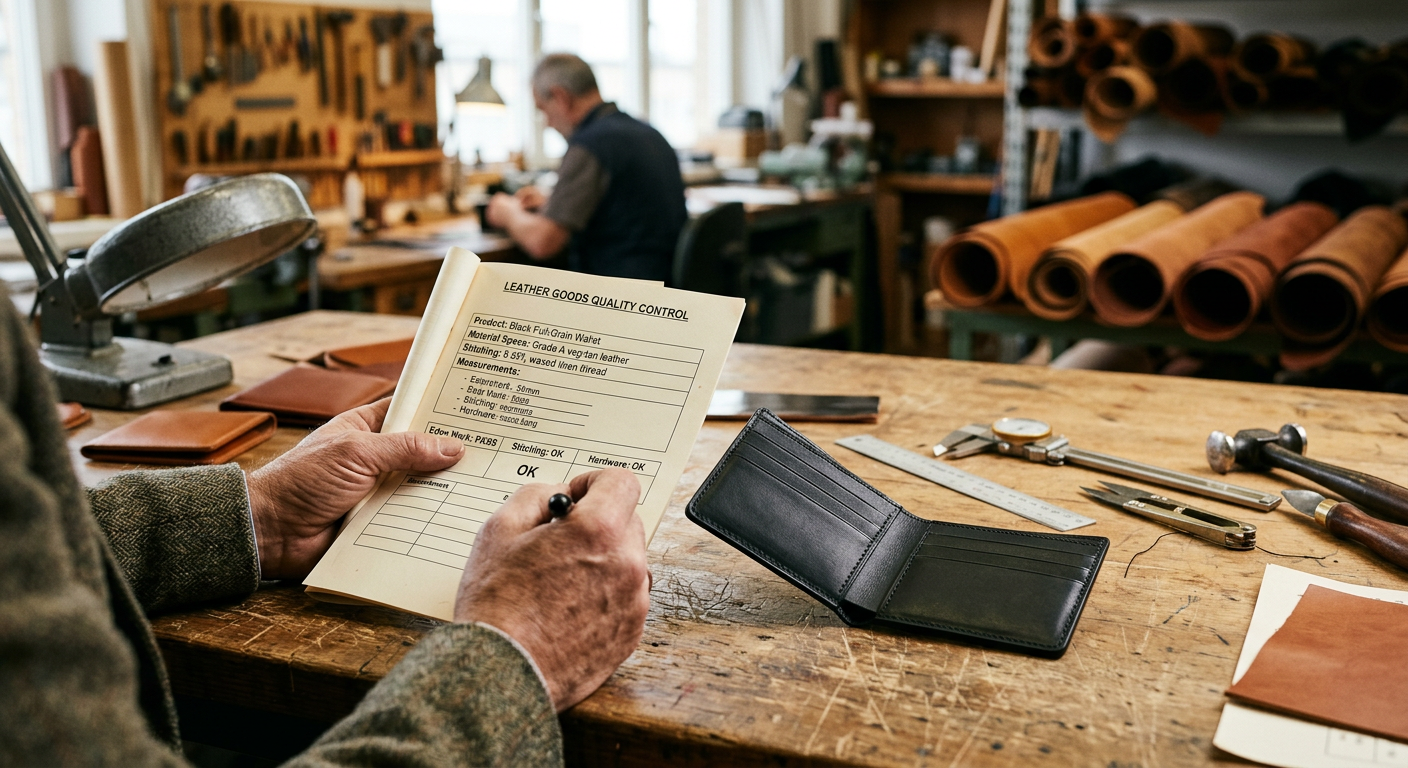
Choosing a manufacturing partner is the most critical decision for a leather goods brand. We share the essential questions buyers must ask to avoid costly errors and find a reliable factory.
The buyer's problem
Choosing a manufacturing partner is arguably the most critical decision a fashion brand founder or sourcing manager will make. The right factory becomes an extension of your team, a partner in quality and growth. The wrong one can lead to months of delays, thousands of pounds in lost investment, and irreparable damage to your brand's reputation before you have even truly started. Getting this decision right from the outset is not a luxury; it is the foundation of a sustainable business.
Many brands, especially those new to production, are unsure what to look for. They focus on the final piece price while overlooking the complex processes that deliver a quality product on time. This is why knowing the right questions to ask a leather manufacturer is so crucial. These questions go beyond surface-level inquiries and probe the factory's capabilities, processes, and a company's culture. They are your primary tool for separating seasoned, professional operations from opportunistic workshops that cannot deliver on their promises.
What "questions to ask leather manufacturer" actually means in a factory
When you ask a potential factory a question, you are not just getting a simple answer. You are initiating a series of checks and considerations on the production floor. Understanding this translation from your query to our actions is key to evaluating a supplier's competence. These are not abstract concepts; they are practical realities that define our daily operations at TAT Manufacture.
For instance, when you ask, "Can you produce this specific design?" we do not just say yes. Our pattern master examines your tech-pack or reference image, assessing the complexity of the construction. We mentally deconstruct the item: Are the curves achievable with our clicking presses? Is the hardware specified something we have a reliable source for? Does the seam construction require a specialised machine, like a post-bed or cylinder-arm sewer, and is that machine and its operator available? A simple question about capability triggers an internal feasibility study before we even quote.
Similarly, asking about our MOQ of 50 pieces per style is not just a number. For us, it represents the minimum hide order we must place with our tanneries, the efficiency of setting up the cutting dies for a production run, and the smallest batch we can process through our assembly line without creating bottlenecks or significant downtime. Your questions to ask a leather manufacturer are the starting point of a complex production-planning process. A professional factory's answers will reflect this depth, giving you confidence that they understand the true scope of your project. This is a core part of the service we have provided for over 25 years, as detailed on our about page.
Materials, specs and standards
Quality is not a vague promise; it is a set of measurable standards. The materials specified and the tolerances adhered to during production are what separate a premium product from a disappointing sample. We work with a wide range of leathers—from Italian full-grain cowhide to supple sheep nappa—and source components from trusted suppliers, including YKK for zippers and Prym for fasteners. But beyond the sourcing, it is the precision in execution that matters.
When we receive a tech-pack, we analyse it against our internal production standards. If a specification is not provided by the client, we revert to our house standards, which are built on decades of experience producing for discerning European and North American brands. Below is a sample of the technical specifications we manage. Vetting a supplier on these points is one of the most important questions to ask a leather manufacturer, as it reveals their attention to detail.
| Specification | Our Standard Tolerance/Metric |
|---|---|
| Stitching Density (SPI) | 8-10 SPI for strength; 10-12 SPI for fine details on leather wallets. |
| Thread Specification | Gütermann MARA or Tera bonded polyester/nylon, Tex 40-90. |
| Edge Paint Application | 3-5 layers, with sanding between each layer for a smooth, durable finish. |
| Colour Matching | Lab dip approval against Pantone (TCX) codes; tolerance within ∆E < 1.5. |
| Hardware Plating | Minimum 3-micron plating thickness for high-wear items, salt spray tested. |
| Dimensional Tolerance | +/- 2mm on finished goods dimensions up to 300mm. |
| Reinforcement | Critical stress points (e.g., handle anchors) are reinforced internally. |
| HTS Code Classification | We provide accurate HTS codes for customs, e.g., 4202.21 for leather handbags. |
Our process, step by step
Transparency in process is a hallmark of a trustworthy partner. We want our clients to understand exactly what happens from the moment they send an enquiry to the day their goods are shipped. This clarity helps manage expectations and ensures a smooth, collaborative journey. Our production workflow is refined for efficiency and quality control at every stage.
- Enquiry & Quoting: You send us your tech-pack, sketches, or a reference sample image via our contact form. We review the design, materials, and construction, and typically provide a detailed FOB quote within 24-48 hours.
- Material Sourcing & Confirmation: Upon quote approval, we source the exact leather and hardware required. We send you cuttings and swatches for physical approval before any production begins.
- Pattern & Die Making: Our pattern makers create precise paper patterns from your tech-pack. For larger orders, we create steel cutting dies to ensure perfect consistency across hundreds of units.
- Prototyping & Sampling: We create a first prototype. This sample is a physical representation of your design, allowing you to check the construction, proportions, and feel. We courier this to you for feedback.
- Sample Revisions: Based on your feedback, we make any necessary adjustments. Usually, one or two revisions are enough to perfect the product. Our goal is your complete satisfaction before bulk production.
- Pre-Production Approval: Once you approve the final 'sealed' sample, it becomes the benchmark for quality for the entire production run. We also finalise all packaging and labelling details at this stage.
- Bulk Production: With your go-ahead and deposit, we begin mass production. This includes leather clicking (cutting), skiving, assembly, stitching, and finishing. Our custom OEM/private-label programme is managed by a dedicated production manager for your project.
- In-Line & Final QC: Quality control is not a single step but a continuous process. We perform checks after cutting, post-stitching, and during final assembly. A final, rigorous AQL (Accepted Quality Limit) inspection is performed on every single item before packing.
- Packing & Boxing: Each item is carefully packed according to your specifications, often in individual polybags and then into export-worthy, 7-ply cartons to prevent damage during transit.
- Logistics & Shipment: We manage all documentation for export and deliver the goods to the port. Our standard term is FOB Chattogram, meaning we handle everything until the goods are loaded onto the vessel. You are then notified with all shipping documents to manage the import on your end.
MOQs, lead times and pricing signals
Understanding a factory's operational numbers is essential for planning your launch and managing your cash flow. Vague answers on these topics are a significant red flag. We believe in being upfront about our capacity, timelines, and pricing structure so you can make informed decisions.
Minimum Order Quantity (MOQ): Our standard MOQ is 50 pieces per style, per colour. This is the minimum we can efficiently run through our production lines. For very small items like certain types of leather accessories, this number can sometimes be adjusted, but 50 units is the baseline for bags, backpacks, and jackets. This allows us to secure good pricing from our tanneries and hardware suppliers.
Lead Times: Time is a critical factor. Our lead times are realistic and broken into two phases:
- Sampling: 10-14 working days from confirmation of all details and materials. This can be faster if materials are readily available.
- Bulk Production: 25-45 working days, depending on the complexity of the product and the order quantity. This timeline begins after you have approved the final pre-production sample and the deposit has been received.
Pricing Signals and Shipping Terms: Our pricing is always quoted as FOB Chattogram (CPA). FOB, or 'Free On Board', means the price includes the cost of the product, packing, and transport to the Port of Chattogram, Bangladesh, including all export clearance fees. You are responsible for the sea/air freight, insurance, and import duties/taxes in your home country. This clear incoterm prevents any hidden costs and is the global standard for B2B trade.
Common mistakes buyers make
We have worked with hundreds of brands over the years, from established labels to first-time founders. We have seen what works and what causes friction. Avoiding these common pitfalls will make your production experience significantly smoother and more successful.
- Providing an Incomplete Tech-Pack: A tech-pack that lacks dimensions, material specs, or hardware details leads to guesswork, delays, and incorrect samples.
- The Fix: Even if you cannot create a professional CAD drawing, provide a detailed document with clear photos, measurements, specific requests for leather type (e.g., 'full-grain semi-aniline cowhide, 1.2mm'), and links to desired hardware. The more detail, the better.
- Unrealistic Price Expectations: Expecting a premium full-grain leather bag for the price of a polyurethane one. The cost of raw materials is the primary driver of the final price.
- The Fix: Do your research. Understand the market price of the raw materials you want to use. We can always offer suggestions for cost engineering, such as using a more economical leather or simplifying construction, but quality has a price.
- Requesting a Single-Piece Sample for Free: New brands sometimes ask for a free sample before committing to anything. This is not feasible for a factory, as creating a single prototype involves significant pattern-making and labour costs.
- The Fix: Be prepared to pay for samples. The sample cost (typically 2-3x the bulk price) reflects the individual attention and setup required. We credit 50% of the sample cost back on a bulk order, showing our commitment to partnership.
- Ignoring Shipping and Import Costs: A great FOB price can be overshadowed by unexpectedly high shipping, customs duties, and VAT charges.
- The Fix: Before placing an order, get quotes from freight forwarders and use an online duty calculator with the correct HTS codes (which we provide) to estimate your total landed cost. This is the true cost of your product.
- Changing the Design After Production Starts: Requesting changes after the leather has been cut is often impossible and always costly, leading to delays and wasted material.
- The Fix: Finalise every detail during the sampling stage. The approved pre-production sample is the 'contract' for what will be produced. Be 100% certain before giving the green light for bulk manufacturing.
- Poor Communication: Vague feedback like "I don't like it" on a sample is not actionable. Slow responses to questions delay the entire production timeline.
- The Fix: Provide specific, constructive feedback (e.g., "Reduce the handle drop by 2cm," or "The stitching on the front pocket is not straight"). Respond to factory emails promptly.
Ready to move from research to samples? Send us your tech-pack or reference image and we'll come back within 24 hours with materials, MOQ and an FOB quote. Request a quote →
How to evaluate a supplier for this
Once you have a shortlist of potential manufacturers, how do you conduct your final evaluation? Use this checklist of actionable steps to verify their claims and ensure they are the right fit for your brand. Any serious factory will welcome this level of scrutiny.
- [ ] Assess Communication Quality: Is their communication prompt, clear, and professional? Do they answer your technical questions with detailed, confident answers, or are their replies vague and evasive? This is the first and most important test.
- [ ] Request a Full Factory Profile: Ask for their company details, year of establishment, number of employees, and list of primary machinery. Professional operations have this information ready.
- [ ] Review Their Product Catalogue and Gallery: Examine their existing work. Do they specialise in the type of product you want to make? Look at the stitching, edge finishing, and overall craftsmanship in their photos. Our online gallery shows our factory floor and a range of finished products.
- [ ] Verify Their Social Compliance: Ask about their ethical policies. While formal audits like BSCI or SEDEX are common, even a factory's internal policies on worker hours, wages, and safety are a key indicator of a responsible business.
- [ ] Pay for a Sample: The best way to test a factory is to make a sample. It tests their ability to follow instructions, their workmanship, their communication, and their logistics. This is the single most valuable data point you can collect.
- [ ] Ask for Anonymised References: While they cannot reveal client names, they should be able to provide case studies or connect you with a long-term client in a non-competing category who has agreed to speak with potential new partners.
- [ ] Discuss Failure and Resolution: One of the best questions to ask a leather manufacturer is, "Tell me about a time a production run had a problem, and how did you fix it?" A good partner does not pretend mistakes never happen; they have a clear process for resolving them.
Case snapshot
A German startup brand approached us to develop a line of minimalist, high-end leather backpacks aimed at urban professionals. Their founder had a strong design vision but no prior manufacturing experience. They were struggling to find a factory that could meet their quality standards without demanding an unmanageable MOQ of 500+ units. They provided a very detailed tech-pack, which immediately showed us they were serious. We began with a single sample of their hero product. After one small revision to the strap attachment point, they approved the prototype. They placed an initial order for 150 units, split across two colours (75 of each), which was manageable for them and efficient for us. The entire process, from initial contact to the goods being loaded FOB Chattogram, took 75 days. This included sourcing a specific water-resistant waxed canvas from a partner mill. The product launched successfully, selling out within four months. They have since become a regular client, placing seasonal orders of 300-500 units and expanding their range to include matching briefcases and dopp kits.
Frequently asked questions
How is the price of my product calculated?
The price is primarily determined by three factors: 1) Cost of materials (leather is the biggest component), 2) Labour complexity (how long it takes to cut, stitch, and finish the item), and 3) Order quantity (larger orders have better price efficiency). We provide a transparent cost breakdown in our quotes.
Can I split the 50-piece MOQ across different colours or styles?
Our MOQ of 50 pieces is per style, per colour. This is because each colour requires a separate material order and production setup. However, for a large total order, we can sometimes offer flexibility. It is always best to ask for your specific scenario.
What is your policy on samples?
We require payment for samples before production. The cost is typically 2x the estimated bulk price per unit, plus courier charges. This covers the high cost of manual pattern making and one-off development. We credit 50% of this sampling fee towards your subsequent bulk order over 100 units.
Can you handle shipping to my country?
Our standard pricing is FOB Chattogram. This means you are responsible for arranging and paying for the freight forwarder, insurance, and import process. However, we have relationships with several international freight forwarders and can provide you with a CIF (Cost, Insurance, Freight) or DDP (Delivered Duty Paid) quote upon request if you prefer a more all-inclusive service. You can find more details in our Buyer FAQ.
How much can I customise a product?
Virtually every aspect of a product can be customised. This is the core of our custom/OEM service. You can specify the leather type, colour, and finish; lining material; thread colour; hardware style and finish; and add your own branding through embossing, foil stamping, or woven labels.
How do you perform Quality Control (QC)?
We have a multi-stage QC process. First, raw materials are inspected upon arrival. Second, we have in-line QC inspectors who check the products during key assembly stages. Finally, every single finished item undergoes a 100% final inspection before packing, where it is checked against the approved pre-production sample for any defects in material or workmanship.
Next step
Armed with these questions, you are now better prepared to vet and select a leather manufacturing partner who can help grow your brand. Building a quality product line starts with finding a quality factory that understands your vision and is transparent about its processes.
If you are ready to put our process to the test, please send us your design specifications. We look forward to reviewing your project and showing you why discerning brands choose TAT Manufacture. Request a Quote to get started, or browse our full range of leather bags to see the quality we deliver.
Ready to manufacture
Request a quote from TAT Manufacture
Full-grain leather, low MOQ from 50 pcs, OEM & private label. Get a detailed itemised quote within 24 hours.
25 years of leather manufacturing craftsmanship.
Services →OEM, private label, and custom leather production.