Leather Manufacturing
10 Red Flags That Indicate a Leather Factory May Not Be Reliable
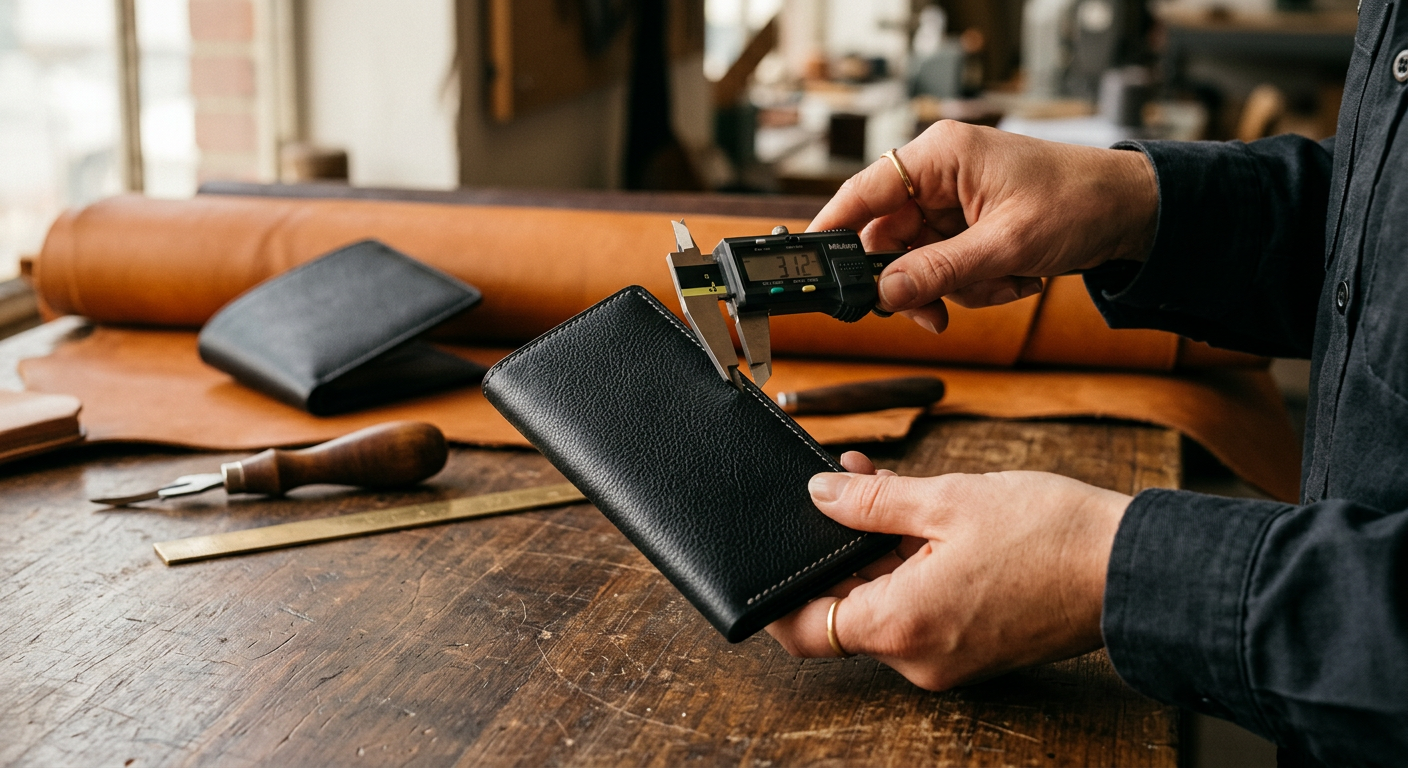
Sourcing a new supplier is a critical decision. We share ten common warning signs that a leather manufacturer may not be the long-term production partner you need for your brand.
The buyer's problem
Choosing a manufacturing partner is one of the most critical decisions a brand founder or sourcing manager will make. The right factory becomes an extension of your team, a cornerstone of your supply chain that enables growth and protects your brand's reputation. The wrong choice, however, can lead to catastrophic delays, inconsistent quality, lost capital, and irreparable damage to your customers' trust. Sourcing a truly reliable leather factory is not simply about finding the cheapest quote; it's about identifying a partner with the technical capability, transparent processes, and commercial integrity to deliver on their promises, order after order.
Many factories present a polished front, only for the cracks to appear after a purchase order is placed and a deposit is paid. Missed deadlines, materials substituted without approval, and finished goods that bear little resemblance to the approved sample are common complaints. For a buyer, especially one managing production from thousands of miles away, these issues are immensely stressful and costly. The goal of this article is to equip you with the knowledge to spot the warning signs early, helping you to filter out unsuitable suppliers and focus your energy on building a relationship with a factory that values quality and partnership as much as you do.
What "reliable leather factory" actually means in a factory
The term 'reliable' is often used, but in the context of manufacturing, it has a precise meaning that extends far beyond simply shipping a product. For us, being a reliable leather factory is a commitment that manifests in every corner of our operation, from the front office to the shipping dock.
First, it means consistency. It's the ability to produce the 500th unit of a leather wallet with the same precision and material quality as the first pre-production sample. This isn't accidental; it is the result of rigorous process control. On our factory floor, this looks like documented Standard Operating Procedures (SOPs) at each workstation, calibrated machinery, and patterns that are digitised and cut by computer (CNC) to ensure uniformity. It means our leather stock is stored in a climate-controlled environment and our hardware is sourced from the same approved suppliers for every batch.
Second, reliability means proactive communication. A good factory doesn't wait for the buyer to discover a problem. If a specific hide shows more natural variation than expected, or if a hardware shipment is delayed by a day, a reliable partner informs you immediately, presents the issue, and proposes a solution. This transparency builds trust and allows for collaborative problem-solving, rather than last-minute surprises. It requires a dedicated merchandising and client management team that understands your brand and can communicate clearly in English.
Finally, reliability is about accountability. When mistakes happen—and in manufacturing, they occasionally do—a reliable factory takes ownership. They don't make excuses or shift blame. Instead, they activate their quality control system to contain the issue, analyse the root cause, and implement corrective actions to prevent it from happening again. This is the true test of a production partner: not whether they are perfect, but how they respond when things are not.
Materials, specs and standards
A factory's attitude towards technical specifications is a direct indicator of its reliability. Vague promises of 'high-quality leather' are a red flag. A professional manufacturer will be able to discuss and commit to precise, measurable standards for every component of your product. This ensures there is no ambiguity in what is being ordered and what will be delivered.
For example, when discussing a custom bag project, we expect to define everything from the leather's thickness to the plating on the buckles. These details are not trivial; they are the blueprint for a successful product. We work with clients to formalise these specs in a tech pack, which becomes the guiding document for sampling and bulk production. We commonly work to an Acceptable Quality Limit (AQL) of 2.5/4.0 and can accommodate stricter requirements as needed. Below is a sample table illustrating the level of detail a reliable leather factory should be comfortable discussing.
| Specification | Our Standard / Common Options | Tolerance / Checkpoint |
|---|---|---|
| Leather Type | Full-grain, top-grain, corrected-grain, split suede | Visual inspection, hand-feel, swatch approval by client |
| Leather Thickness | 1.2-1.4mm (bags), 0.8-1.0mm (wallets), 3.0-3.5mm (belts) | +/- 0.1mm, checked with digital caliper post-skiving |
| Stitching Thread | Coats, Amann; Tex 60-90 for bags, Tex 40 for wallets | Match to approved sample; colour, thickness, and material |
| Stitches Per Inch (SPI) | 7-9 for bags, 10-12 for wallets and small goods | +/- 1 SPI, checked with gauge at in-line QC stations |
| Zippers | YKK (Brass, Vislon, Coil), SBS, or other specified brand | Function test on 100% of units, puller/slider check |
| Hardware Material | Solid Brass, Zinc Alloy, Stainless Steel | Material certificate available on request, magnet test |
| Edge Finish | Burnished, Folded, or Edge Painted (e.g., Fenice) | 3-5 coats of paint; check for cracking, smoothness |
| HTS/HS Code | E.g., 4202.21 (Handbags with outer surface of leather) | Verified with client and freight forwarder pre-shipment |
Our process, step by step
Transparency is key to trust. A factory that is hesitant to explain its production process in detail should be viewed with caution. A clear, sequential workflow demonstrates organisation and control. This is the step-by-step process we follow with every client, from their first email to the moment their goods are loaded for export.
- Enquiry & Initial Quote: You send us your tech pack, drawings, or reference images. Within 24 hours, our team reviews the design and provides an initial estimate covering price per unit, MOQ, and material options.
- Specification Review: We hold a detailed discussion to finalise every aspect of the product—leather, lining, hardware, branding, and packaging. This is where we lock down the technical details from the table above.
- Material Sourcing & Confirmation: We source the exact materials for your approval. We can send you physical swatches of the leather and hardware finishes so you can see and feel the quality before committing.
- Sample Development: Our sampling department creates your pre-production sample (PPS). This typically takes 10-14 days. The sample is an exact replica of what your bulk production will look like. We ship it to you for feedback and approval.
- Order Confirmation & Deposit: Once you approve the sample, you place your official Purchase Order (PO). Production is confirmed upon our receipt of a 50% deposit.
- Cutting & Preparation: With the PO confirmed, we procure all materials for the bulk run. Our technicians use the approved patterns to cut the leather panels. At the same time, other components are prepared—skiving edges, splitting straps, and stamping logos.
- Stitching & Assembly: The cut components move to our stitching lines. Each artisan is responsible for a specific part of the assembly process, ensuring efficiency and specialisation. This is where your leather bags or accessories start to take shape.
- In-Line & Final Quality Control: We don't wait until the end to check for problems. Our QC team performs inspections at multiple stages of the assembly line (in-line QC). A final, rigorous inspection is performed on every single finished item before it is cleared for packing.
- Packing & Final Payment: Each item is cleaned, stuffed (if required), and packed into individual polybags and then into export-grade master cartons as per your specifications. We issue the final invoice, and the 50% balance is due before shipment.
- Shipment & Documentation: We manage the booking with the shipping line and transport the container to the port. We operate on FOB Chattogram (Bangladesh) terms. All necessary export documentation (Commercial Invoice, Packing List, Bill of Lading, Certificate of Origin) is prepared and sent to you or your freight forwarder.
MOQs, lead times and pricing signals
Commercial terms are not just numbers; they are strong indicators of a factory's structure and reliability. Misinterpreting these signals is a common pitfall for new buyers.
Our Minimum Order Quantity (MOQ) is 50 pieces per style, per colour. We have established this threshold because it represents the smallest viable batch for efficient material purchasing and production line setup. A factory offering a 10-piece MOQ is almost certainly not a factory at all, but a trading agent or a small workshop that cannot offer scalability or consistent quality control. Conversely, a factory demanding a 1,000-piece MOQ may not be the right fit for a new or niche brand needing to test the market.
Lead times are another critical signal. Our standard is 10-14 days for samples and 25-45 days for bulk production, commencing from the date of deposit. This timeline is realistic; it accounts for material sourcing, production scheduling, QC, and packing. Be very wary of any manufacturer promising a complex leather bag in 15 days. This either means they are cutting corners on quality control, using pre-stocked (and possibly inferior) materials, or are simply not being truthful to win the order.
Pricing Signals from a Reliable Leather Factory
Pricing that seems too good to be true almost always is. An unusually low price is the biggest red flag in sourcing. It can only be achieved by compromising in one of three areas: materials (using cheaper corrected-grain or split leather instead of full-grain), labour (unethical wages or working conditions), or quality control (skipping inspection steps). A professional factory will provide a detailed cost breakdown and will be able to justify their pricing based on the quality of the components and the complexity of the labour involved. While we strive to be competitive, we will never compete in a race to the bottom that compromises the integrity of your product. A slightly higher price from a reliable leather factory is an investment in peace of mind.
Common mistakes buyers make
Over our 25 years in business, we've seen buyers make the same avoidable mistakes when engaging a new factory. Here are some of the most common, and how to prevent them:
- Providing Incomplete Tech Packs: A vague tech pack with missing measurements or unspecified hardware is an invitation for the factory to make its own interpretations, which will rarely match your vision. The Fix: Create a comprehensive tech pack for every product. Specify all materials, dimensions, hardware, colours, and construction details. If you need assistance, a good factory can help you build one based on your designs.
- Choosing a Factory on Price Alone: Selecting the supplier with the absolute lowest FOB price without considering other factors is the single most common cause of production failure. The Fix: Evaluate suppliers holistically. Consider their communication, technical expertise, QC processes, and willingness to provide detailed information. The cheapest quote often becomes the most expensive mistake.
- Skipping the Final Sample: Some brands, in a rush, approve production based on a proto-sample made with available materials, not the final specified ones. This is extremely risky. The Fix: Always insist on a Pre-Production Sample (PPS) made with the exact bulk materials and hardware. This is your final insurance policy before committing to thousands of units.
- Ambiguous Feedback on Samples: Providing feedback like "the strap feels wrong" or "make it look better" is not actionable. The Fix: Be specific and objective. Use photos, mark up a PDF, and provide numbered comments. For example: "1. Increase strap width from 3cm to 3.5cm. 2. Change stitching on front pocket from black to dark brown, Coats thread Tex 80. 3. The edge paint is chipping; please re-evaluate the application process."
- Ignoring Logistics Until the Last Minute: Not understanding Incoterms or failing to have a freight forwarder and customs broker ready can cause major delays and unexpected costs once the goods are finished. The Fix: Discuss shipping terms early. We ship FOB Chattogram. This means the buyer is responsible for arranging and paying for ocean freight, insurance, and destination charges. Clarify these details and have your logistics partners in place long before production is complete. Our Buyer FAQ page has more details on this.
How to evaluate a supplier for this
Once you have a shortlist of potential factories, how do you conduct your due diligence? Here is a practical checklist to help you assess whether a manufacturer is truly a reliable leather factory.
- Assess Communication Quality: Send a detailed technical question. Do they respond within 24-48 hours? Is the answer clear, professional, and in good English? Or is it a one-line, vague reply? Their pre-order communication is the best you can expect; it will not get better after they have your money.
- Drill Down on Material Sourcing: Ask where they source their leather and hardware. Can they provide details about the tannery? Are they able to source certified materials (e.g., from LWG-rated tanneries) if required? A factory with strong supplier relationships will have no problem answering this.
- Request a Live Video Tour: While a physical visit is ideal, a live video call is a powerful alternative. Ask them to walk you through the factory floor—from the cutting tables to the stitching lines to the QC station. Look for organisation, cleanliness, and safety measures. See our pre-recorded tour in our factory gallery to get a sense of our setup.
- Order a Sample and Scrutinise It: There is no substitute for holding a physical sample. Check the stitch consistency, the feel of the leather, the quality of the edge paint, the smoothness of the zippers, and the weight of the hardware. This is a direct reflection of their capability.
- Interrogate Their QC Process: Ask them to explain their quality control system. How many inspection points are in the production line? What AQL do they work to? Do they have a dedicated QC manager? Ask for a sample QC report.
- Review Their History and Expertise: A factory that has been in business for decades, like our own 25-year history detailed on our /about page, has weathered economic cycles and proven its sustainability. This longevity is a strong indicator of reliability.
Ready to move from research to samples? Send us your tech-pack or reference image and we'll come back within 24 hours with materials, MOQ and an FOB quote. Request a quote →
Case snapshot
A German retail brand approached us after a deeply negative experience with another supplier. Their previous factory had substituted the specified full-grain leather on their line of custom leather backpacks with a cheaper, corrected-grain alternative between the approved sample and bulk production. This bait-and-switch destroyed their trust and left them with unsellable inventory. They came to us cautiously, looking for a partner who prioritised transparency. Their initial order was for 200 units (4 styles x 50 pcs). We addressed their primary concern head-on by creating a multi-stage approval process. First, we sent them large cuttings of the exact leather batch for approval. Only after their sign-off did we proceed to make a final pre-production sample. The entire sampling stage took 14 days. Following approval, the production run of 200 backpacks was completed in 38 days. The goods were inspected by a third-party QC agency hired by the client at our factory and passed with a 99% acceptance rate. The order shipped FOB Chattogram and arrived on time for their new season launch. They have since become a regular client, and we have helped them expand into new product categories.
Frequently asked questions
What is your pricing for a typical leather tote bag?
Pricing is dependent on three main factors: the leather chosen, the hardware complexity, and the construction of the bag. As a ballpark, a medium-sized tote bag made from high-quality full-grain cowhide with standard zinc-alloy hardware and a cotton lining, based on our 50-piece MOQ, might fall in the range of £35-£55 per unit (FOB Chattogram). For a precise quote, we need to see your specific design and tech pack.
Why is your MOQ 50 pieces? Can you do less?
Our 50-piece MOQ per style/colour is the minimum required to run an efficient production. Tanneries and hardware suppliers have their own minimums, and setting up a production line for fewer than 50 units makes the cost per unit prohibitively high. For orders below this, the process is considered bespoke craftsmanship rather than batch production. While we focus on scalable manufacturing, this MOQ allows emerging and established brands alike to produce viable quantities.
How does the sampling process work?
Once we agree on the design and quote, we charge a sample fee, which is typically 2-3 times the bulk unit price to cover the higher cost of materials and artisan time for a single piece. This fee is often credited back against a bulk order. The process takes 10-14 days. We create the sample using the exact specified materials. We then ship it to you for approval. One round of minor revisions is typically included. Major design changes would require a new sample.
What are your shipping terms?
We operate on FOB (Free On Board) Chattogram Port, Bangladesh terms. This is a standard Incoterm where we are responsible for all costs associated with getting the goods packed, cleared through our customs, and loaded onto the shipping vessel at the port of Chattogram. From that point, the buyer is responsible for the ocean freight, insurance, destination port fees, import duties, and final delivery.
Can you replicate a design from a picture?
Yes, we can. A clear photograph can be a great starting point. Our team can work from images to create a technical drawing and initial sample. However, for the best accuracy and to ensure your vision is perfectly captured, a detailed tech pack is always preferred. We can assist you in developing a full tech pack as part of our custom OEM programme.
How do you ensure consistent quality across a production run?
We use a multi-stage QC system. First, all incoming raw materials are inspected. Second, we have 'in-line' inspectors who check the product at critical assembly stages. Third, every single finished product undergoes a final, 12-point inspection before packing. We check for stitching accuracy, material defects, hardware function, measurements, and overall cleanliness. We typically work to an AQL 2.5 standard.
Next step
Finding a partner you can trust is the most important step in building your brand's supply chain. A factory should not be a black box; it should be a transparent and collaborative partner in your growth. If our approach to process, quality, and communication aligns with what you are looking for in a manufacturer, we invite you to take the next step.
Send us your design specifications through our contact form for a detailed quote, or browse our full range of leather accessories to see examples of the craftsmanship we deliver to brands worldwide.
Ready to manufacture
Request a quote from TAT Manufacture
Full-grain leather, low MOQ from 50 pcs, OEM & private label. Get a detailed itemised quote within 24 hours.
25 years of leather manufacturing craftsmanship.
Services →OEM, private label, and custom leather production.